
2026 Client Entertainment Ideas for C-Suite Executives
Thoughtful ways to host senior executives this year, with private dining, cultural access and race-weekend hospitality matched to each guest.
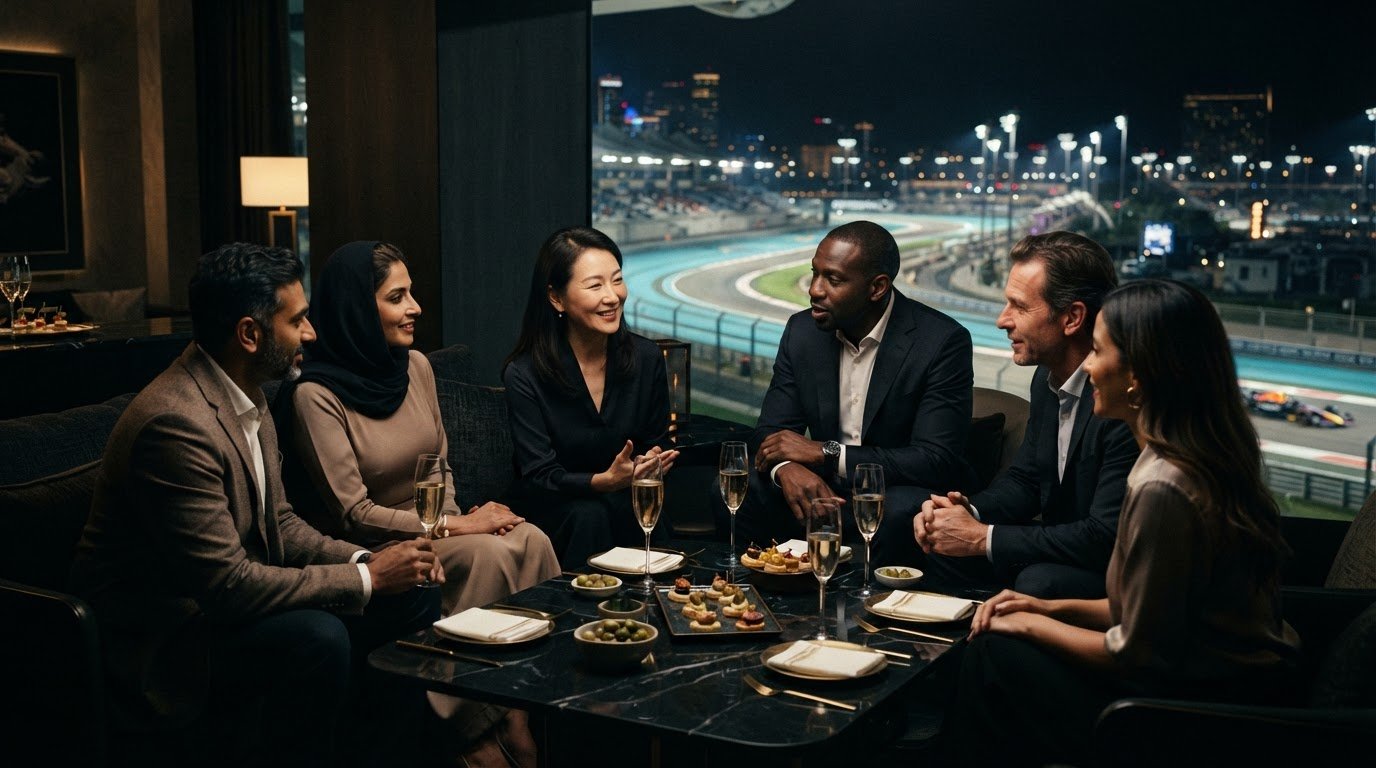
The most memorable executive invitation is rarely the one with the fullest schedule. For C-suite guests, a considered setting and an unhurried exchange can matter more than spectacle alone. The strongest client entertainment ideas for C-suite executives start with the relationship: its history, the guest’s preferences, and the reason for bringing people together. Senior leaders have limited time, so generic hospitality can feel disconnected from both their expectations and the business at hand.
Choosing well means balancing distinction with ease, and making room for conversation without turning the occasion into a sales meeting. This guide compares intimate gatherings, cultural outings, curated culinary experiences, and high-profile sporting hospitality, including Formula 1. Trackside viewing suites and gourmet dining can pair a shared live event with private spaces for conversation. With more than 15 years of experience in premium Formula 1 hospitality and brand activations, AIOKA brings a considered perspective to this format. Use the framework below to match an experience to your guests and objectives, then shape an invitation, hosting approach, and follow-up that feel personal and coherent.
Key Takeaways
• Choose client entertainment ideas for C-suite executives by aligning the format with the relationship, guest profile, and purpose of the occasion.
• Compare private dining, cultural access, expert-led discussion, charitable gatherings, sporting hospitality, and private experiences by the kind of conversation each encourages.
• Plan in a clear sequence: set the objective, curate the guest list, send a concise invitation, host attentively, and follow up personally.
• Consider Formula 1 hospitality when guests value live sport and a shared occasion, with private spaces offering room for conversation alongside the event.
• Connect the invitation, setting, hosting style, and follow-up to the guest and the relationship so the experience feels coherent.
What Makes Client Entertainment for C-Suite Executives Different
Client entertainment is hospitality arranged to strengthen an existing or prospective business relationship. It is not simply a way to fill an evening or provide an impressive backdrop. A well-planned occasion gives guests a considered setting where trust, familiarity, and useful conversation can develop. Understanding Corporate Entertainment helps distinguish this broad category from the more focused work of hosting clients with a defined relationship objective.
That distinction matters. Internal team-building focuses on colleagues, shared capability, or workplace culture. Incentive events recognise employee performance, while general networking gatherings bring a wider group together to make new connections. Client hosting is more deliberate: the guest list, setting, and host’s involvement should reflect the relationship with each invited client. The right client entertainment ideas for C-suite executives respect senior guests’ time and interests while leaving room for genuine exchange.
Executive client experience: A tailored hospitality occasion for selected current or prospective clients, shaped around a clear relationship purpose and designed to support relaxed, relevant conversation.
Standard corporate event: A broader gathering that may prioritise employee engagement, information-sharing, or general networking rather than a specific client relationship.
The relationship objective behind an executive invitation
Start by identifying the main intention. Relationship development creates room to understand a prospective client’s priorities; client appreciation recognises an established partnership; and milestone recognition marks a shared achievement or significant moment. Each calls for a different tone, guest list, and level of business discussion. Naming one primary purpose keeps the occasion coherent instead of crowding the programme with presentations, pitches, and social activities.
Let that purpose guide practical choices. To deepen a new connection, choose a format that makes dialogue easy. To recognise a longstanding client, centre the occasion on a shared interest or meaningful milestone, such as marking a joint achievement with a private photography experience from photonow.sg. Before shaping the invitation, decide who should attend, what setting fits the relationship, and how actively the host should participate.
The conditions that make senior-client hosting feel considered
Relevance begins with the guests, not the spectacle. Consider their interests, schedules, familiarity with the host, and the stage of the relationship. A live sporting occasion may suit a client who enjoys the event; a private meal may work better for guests who value conversation and a measured pace. Make the invitation clear about the format and purpose, so each guest understands why their presence matters.
Privacy, thoughtful timing, and well-paced hospitality help senior guests engage without feeling managed. Build in natural pauses for conversation, and avoid forcing participation or steering every exchange toward a commercial agenda. Exclusivity is most persuasive when it reflects attentive curation, not conspicuous status signalling. Make the experience welcoming and discreet, with the host available to connect guests while allowing the occasion to unfold naturally.
Before inviting
define the relationship objective and choose guests who have a reason to be together.
While hosting
stay attentive, make introductions with context, and let conversation take its course.
Afterward
follow up in a way that reflects the exchange instead of sending a generic message.
Six Client Entertainment Ideas for C-Suite Executives
The right format depends on guests’ interests, the relationship’s history, and how much conversation the occasion should allow. These six client entertainment ideas for C-suite executives range from quiet, conversation-led settings to live events with a stronger shared atmosphere. None is right for every group; each works best when it serves a clear purpose.
Intimate formats for conversation and shared interests
Private dining.
A carefully hosted meal offers an intimate setting for client appreciation or relationship development, with conversation unfolding naturally between courses. A considered menu can make the experience feel personal without turning the meal into a pretext for a formal pitch. For a culinary occasion at a Grand Prix, curated culinary hospitality at the Grand Prix pairs dining with the character of a live event.
Cultural access.
An outing shaped around a shared interest in art, design, or performance gives guests a distinctive point of focus. It can suit appreciation or relationship development when the subject genuinely interests the group, with discussion moving naturally between the experience and informal conversation.
Expert-led discussion.
A small gathering with a knowledgeable speaker can centre on a topic relevant to guests’ professional interests. It may suit an emerging relationship where focused exchange is welcome. Keep the discussion engaging and conversational rather than turning it into a disguised presentation.
Charitable gathering.
A modest hosted occasion connected to a cause meaningful to the guests can give the invitation a shared purpose. It may suit relationship recognition or bring together clients with aligned interests. Keep participation comfortable, with no expectation that guests contribute or publicly endorse the cause.
Live experiences that create a shared point of reference
Sporting hospitality.
A live sporting occasion offers energy, a common focus, and moments guests can discuss together. Its pace and sound can make sustained conversation less continuous than at a private meal, so choose it because the guests value the event and allow quieter intervals for exchange. Formula 1 hospitality can bring together trackside viewing, gourmet dining, and private entertaining facilities, balancing the spectacle with space to converse.
A private experience.
This broad format centres on a selected activity or setting arranged for a particular group rather than a standard event programme. It can support appreciation or relationship development when the concept reflects guests’ shared interests. For hosts looking to coordinate client outings around major regional fairs, rodeos, or seasonal celebrations, USA Fest Bot provides a verified calendar of upcoming dates. Keep the activity comfortable and allow guests to engage at their own pace.
Compare formats by their natural conversation dynamic: dining and discussion-led gatherings foreground dialogue, while sporting hospitality places conversation alongside a live occasion. AIOKA’s bespoke Formula 1 hospitality draws on more than 15 years of experience in premium race-weekend hospitality and brand activations. Its corporate hospitality experiences bring trackside viewing, dining, and private entertaining together in a tailored setting: AIOKA’s corporate hospitality experiences.
How to Compare Executive Client Entertainment Formats
A side-by-side comparison makes the choice more deliberate. Rather than ranking settings by prestige, assess what each makes possible: focused conversation, a shared cultural reference, recognition of a valued relationship, or an engaging live occasion. The best client entertainment ideas for C-suite executives fit the guest, relationship stage, and business context, while allowing the host to be present rather than occupied with event logistics.
| Format | Relationship objective | Guest fit | Conversation potential | Formality | Planning complexity |
|---|---|---|---|---|---|
| Private dining | Appreciation or development | Guests who value a quieter setting | High, with time for sustained discussion | Moderate to high | Moderate |
| Cultural access | Appreciation or shared-interest connection | Guests with a relevant cultural interest | Moderate, shaped by the experience | Variable | Moderate |
| Expert-led discussion | Relationship development | Guests interested in a focused subject | High, with a shared topic as an anchor | Moderate to high | Moderate to high |
| Charitable gathering | Recognition or shared-purpose connection | Guests who relate to the cause | Moderate, with a common purpose | Variable | Moderate |
| Sporting hospitality | Appreciation and shared experience | Guests who enjoy live sport | Variable, depending on the event’s pace | Moderate to high | High |
| Private experience | Development or appreciation | Guests suited to the selected activity | Variable, depending on the format | Variable | Variable |
Matching the format to the guest and relationship
For a first introduction, a setting with a natural shared focus can ease the opening exchange without requiring immediate intimacy. An established relationship may suit a quieter occasion with more room for personal conversation. A client-recognition event can feel more meaningful when its details reflect a known preference or milestone. Seniority offers useful context, but it should not replace attention to individual interests, communication style, or schedule.
Before choosing a format, consider whether the guest prefers discreet conversation, a cultural point of connection, or the energy of a live spectacle. A prestigious setting alone does not make an experience relevant.
Balancing conversation, hospitality, and event atmosphere
Each format distributes attention differently. Dining and expert-led gatherings support private discussion; cultural and charitable occasions provide a shared subject; sporting hospitality alternates between collective attention and intervals for exchange. Consider whether the host can engage personally with each guest, and whether the group’s size and composition make introductions feel natural. A crowded guest list can dilute attention, while a highly structured programme may leave little room for spontaneous conversation.
Event intensity and timing matter as much as formality. A long or demanding schedule may not suit guests with limited availability, while a quieter format may feel too restrained for clients who value a lively shared occasion. Choose the format that serves the relationship objective, then refine it around guests’ preferences, available time, and desired balance of conversation and shared attention.
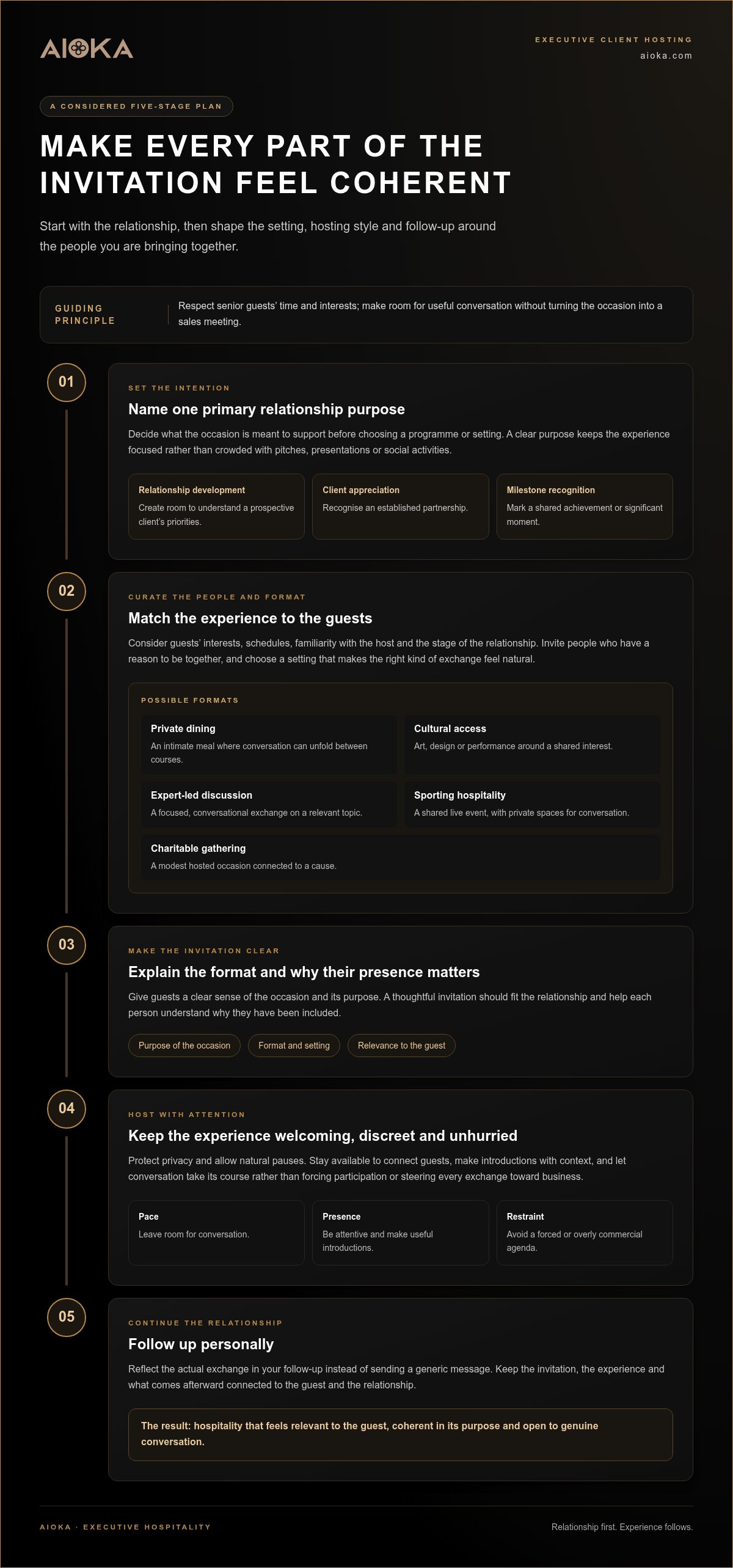
Planning Client Entertainment for C-Suite Guests with Purpose
A composed client experience is shaped well before guests arrive and remains coherent after they leave. To make client entertainment ideas for C-suite executives support a meaningful relationship, carry one clear purpose through the guest list, invitation, event, and follow-up. The goal is not to engineer a particular commercial outcome, but to create the conditions for relevant conversation and a thoughtful next step.
Preparing the guest list, invitation, and experience
Begin with the relationship context, not the guest’s title. Invite people who have a reason to be together, whether they share a business priority, an established partnership, or a connection to the occasion. Shape the experience around their interests and schedules so it feels personal rather than assembled around seniority alone.
Set the objective.
Decide whether the gathering is intended to develop a relationship, express appreciation, or recognise a milestone. Keep one purpose in view so the occasion does not become a sequence of competing messages.
Curate the guest list.
Consider who should meet, what context will make those introductions useful, and whether the group’s composition will help each guest feel included. A carefully considered list is more valuable than a larger one chosen for titles alone.
Extend a concise invitation.
State the occasion, format, and why the guest’s presence is relevant. Share essential details clearly and make the tone consistent with the relationship. Avoid language that suggests a hidden pitch or implies a commitment beyond attending.
Compose the itinerary.
Plan a clear welcome, a central shared experience, and natural intervals for conversation. Explain the shape of the occasion without overloading guests with a minute-by-minute programme; an unhurried structure makes the hosting feel considered.
Hosting with discretion and following up thoughtfully
On the day, make the welcome clear and introductions purposeful. A brief introduction that explains why two guests may value meeting is more useful than a ceremonial round of names. Stay attentive to the group without occupying every pause; guests should have room to continue a discussion, engage with the experience, or simply enjoy the occasion.
Host responsively.
Let business conversation follow the guests’ interest. If a topic arises naturally, engage with it. If the atmosphere is social, do not impose a presentation or redirect every exchange toward a commercial agenda.
Follow up personally.
Refer to a specific moment or conversation from the gathering, then suggest a next discussion only when it fits the relationship. A relevant note demonstrates attention more convincingly than a generic thank-you.
Review the intended outcome.
Note appropriate signals, such as whether a useful introduction was made, a priority became clearer, or a next conversation was agreed. Keep measurement proportionate to the objective and allow the relationship to develop on its own terms; hospitality can support connection, but it cannot promise a commercial return.
For a considered approach to planning and hosting, explore AIOKA’s corporate hospitality experiences, shaped around the occasion, the guests, and the relationship.
Formula 1 Hospitality as a Distinctive C-Suite Client Experience
Formula 1 is one option among the broader range of client entertainment ideas for C-suite executives. It is most fitting when guests value live sport, a shared occasion, and the atmosphere of a race weekend. Its appeal is not simply the spectacle: the event can create a common point of interest around which a host and client connect. As with any format, its suitability depends on the relationship, guest preferences, and purpose of the invitation.
For hosts considering the format, the Formula 1 client entertainment guide for business hosts and 2026 Formula 1 corporate hospitality buyer guide offer further perspectives on planning race-weekend hospitality for business guests.
When Formula 1 suits the relationship and occasion
A shared interest in motorsport can make a race weekend a natural choice for client appreciation or for marking an important stage in an established relationship. A multi-day occasion may suit guests whose schedules and preferences allow them to spend more time together rather than meet for a brief engagement. Formula 1 is not inherently more appropriate for senior guests than a quieter alternative; its value depends on whether the event resonates with the people invited.
Trackside viewing brings the live race into the experience, while hosted dining and private entertaining facilities provide space for conversation around it. This creates a rhythm of shared attention and personal exchange, rather than requiring every moment to serve as a business discussion. Hosts can use quieter intervals to reconnect, make introductions, or simply enjoy the occasion together.
AIOKA’s role in shaping a considered hospitality experience
AIOKA has more than 15 years of experience in premium Formula 1 hospitality and brand activations. Its bespoke multi-day hospitality packages can include trackside viewing suites, gourmet dining, and private client-entertaining facilities, with access to Formula 1 races worldwide. These elements can be shaped into an experience that reflects the occasion and its guests, bringing the live event and hospitality together in a coherent hosting plan.
For organisations seeking to align a brand presence with a race-weekend experience, AIOKA also creates brand activations. The aim is a considered, relationship-led setting, not a promise of a particular response or commercial result. Meaningful business connections still depend on the people, the conversation, and the relationship beyond the event.
Explore how a race weekend could suit your client-hosting objective through AIOKA’s Formula 1 hospitality experiences.
Shape the Next Invitation with Intention
Turn the relationship objective into an invitation that feels relevant to its recipient. Before choosing among client entertainment ideas for C-suite executives, consider what would make time together worthwhile for this particular guest: a shared interest, space for a considered conversation, or an occasion that recognises the partnership. That clarity gives hospitality its purpose and helps the relationship continue beyond the event.
For clients who value Formula 1, AIOKA brings more than 15 years of experience in race-weekend hospitality and brand activations to bespoke multi-day packages that can include trackside viewing, gourmet dining, and private client-entertaining facilities. Together, these elements shape an occasion around both the live event and the relationship it brings together.
Explore AIOKA’s Formula 1 hospitality experiences to consider how a race-weekend setting could serve your next client invitation. A thoughtful experience can open the door to a more personal, enduring business conversation.
Frequently Asked Questions
What are the best client entertainment ideas for C-suite executives?
The best client entertainment ideas for C-suite executives depend on the relationship, guest interests, and purpose of the occasion. Private dining allows an unhurried exchange, cultural experiences offer a shared subject, peer discussions centre on a relevant question, charitable gatherings connect around a cause, and sporting hospitality adds a live atmosphere. Choose a setting that feels pertinent rather than simply novel, and let conversation develop without turning the occasion into a pitch.
How do you entertain senior clients without making the event feel like a sales pitch?
Set a clear relationship purpose, choose an experience that makes sense for the guests, and let them shape the conversation. At dinner, for example, the host can introduce a topic and listen to what the client wants to discuss instead of moving through prepared talking points. Keep formal business material separate unless guests invite it. A personal follow-up can acknowledge the exchange without implying that attendance signals a buying decision.
How many clients should a C-suite entertainment event include?
There is no universal guest count; the number should suit the format and the kind of interaction you want to make possible. A smaller group can give each person more opportunity to speak and make introductions with context. A larger hosted occasion may work for a shared live experience, where guests can engage at different moments. Invite people with a genuine reason to meet, and consider whether the host can engage meaningfully with everyone.
What should an invitation to a C-suite client event include?
Include the occasion, date, location, expected format, and a concise reason the invitation is relevant to that guest. A personal note might explain that the gathering brings together people with a shared interest or recognises an important partnership. Make practical details easy to find, including how to respond and any schedule information that affects attendance. Keep the language measured; inflated promises or pressure can make a thoughtful invitation feel transactional.
How far in advance should you invite C-suite clients to an event?
Time the invitation around the occasion’s demands, guests’ schedules, and whether travel or other arrangements are involved. A formal event or one requiring travel generally calls for more notice than a local gathering with a flexible format. Send the invitation once its essential details are clear, then share relevant updates as plans take shape. Rather than relying on one standard lead time, allow enough space for each guest to assess commitments and respond comfortably.
How can a host follow up after entertaining a senior client?
Send a personal note that recalls a genuine moment, such as an idea the guest raised or a shared experience you discussed. Acknowledge their time, keep the message proportionate to the relationship, and suggest a next conversation only if it has a clear purpose. If there is no natural business step to propose, a sincere expression of appreciation is sufficient. Follow-up should preserve continuity, not turn the event into an immediate sales request.
Is Formula 1 hospitality suitable for every C-suite client?
No. Formula 1 hospitality is best suited to clients who value motorsport and a live sporting atmosphere, where viewing, dining, and conversation can form parts of one hosted occasion. A guest who prefers quieter surroundings or has little interest in racing may be better suited to a cultural, culinary, or discussion-led experience. Treat the sport as a way to create a relevant shared occasion, not as a guarantee of engagement or business results.


