
Creating a Seamless F1 Guest Experience Through Smart Planning
How tailored schedules, attentive guest support and calm crowd planning help a Grand Prix weekend feel composed, from arrival to the final engagement.
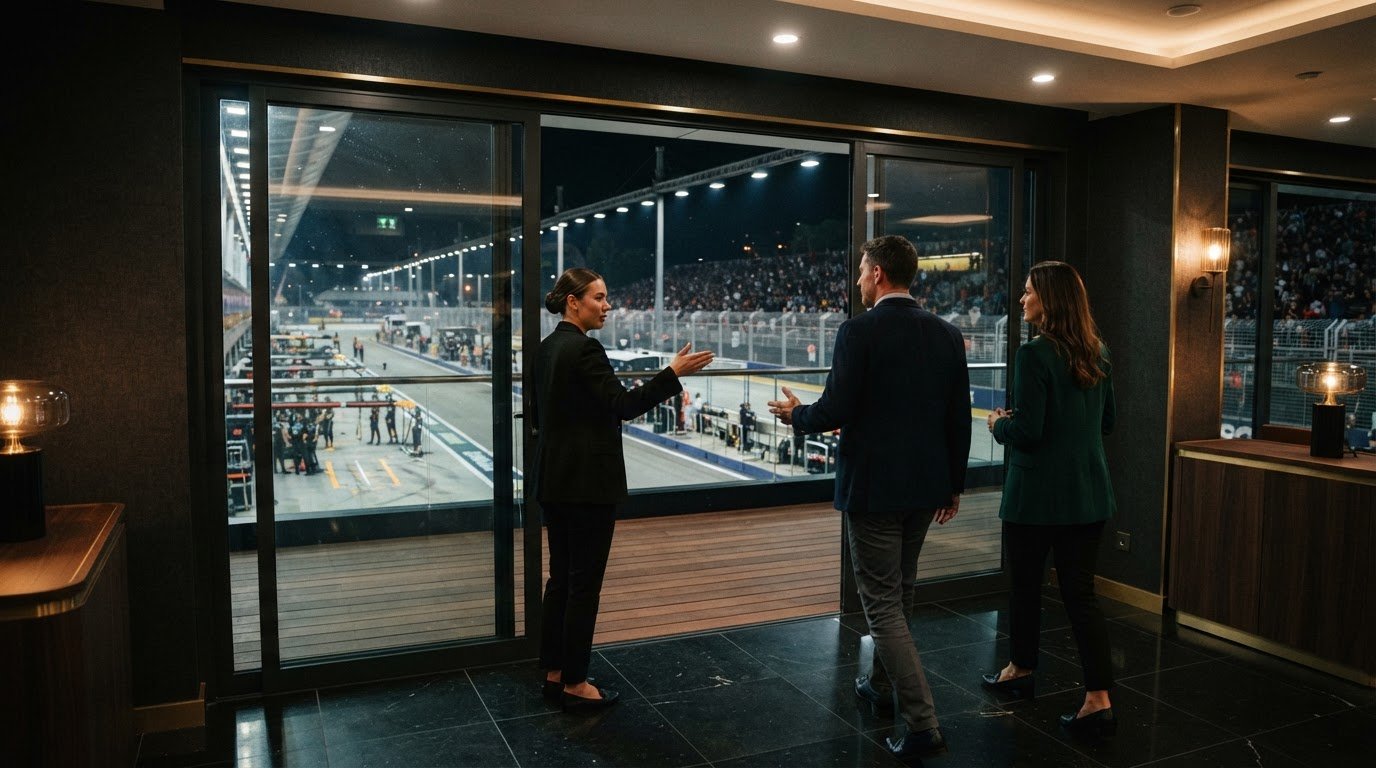
A polished race-weekend itinerary is only as seamless as the support behind it. Creating a seamless F1 guest experience depends on personalized schedules, responsive guest services and thoughtful crowd management working in concert. Together, these elements help guests move between the circuit, hospitality and planned engagements with greater ease.
The appeal of a Grand Prix weekend lies in its pace and atmosphere, yet transfers, entrances and queues can disrupt the day if they are not part of the plan. Attentive support helps guests feel guided without being hurried, while hosts can focus on the conversations and relationships that matter.
This article explores how to shape a schedule around guest priorities, coordinate service throughout the weekend and anticipate points where crowd movement may create friction. It also considers how considered hospitality and culinary experiences can bring those details together, so the occasion feels composed from arrival through the final engagement.
Key Takeaways
• Shape the race-weekend itinerary around guest priorities, with transfers and key engagements arranged to preserve time for the experience.
• Coordinate responsive guest support across arrivals, hospitality and live activities so guests feel guided throughout the weekend.
• Anticipate busy access points and queue pressure by planning clear movement between the circuit’s spaces.
• Choose hospitality and culinary experiences that complement the circuit setting and create natural opportunities for guests to connect.
Personalized race-weekend schedules
Start by understanding each guest’s priorities, arrival window and preferred balance of racing, hospitality and entertainment. A client meeting may need protected time for conversation, while a family celebration may benefit from flexible viewing and dining. Record preferences in a shared itinerary and build each day around essential commitments.
Austin, Miami and Las Vegas call for distinct schedules shaped by each venue’s access points, circuit setting and surrounding plans. Rather than reuse one template, map the route and key engagements for each Grand Prix. At the Texas Grand Prix, one reported first track transfer was scheduled for 8-8.15 am, illustrating why transfer timing belongs in the day’s plan.
Build the sequence around fixed moments first, then place optional experiences in the remaining intervals. A pit walk at the 2026 Mexican Grand Prix took place at 6:15 pm, a useful example of an engagement that can anchor an evening schedule. Add arrival instructions, meeting locations and realistic transition time between each commitment.
Use one shared itinerary as the reference for guests and hosts. Include confirmed bookings, transport arrangements, hospitality timings and a named point of contact. Coordinating these details in one planning flow does not mean every component comes from one seller. Share schedule updates through the agreed communication channel and make the latest version easy to identify.
Weather and revised event timings can disrupt outdoor plans or compress transitions. Prepare an alternate sequence, identify suitable indoor hospitality or dining options, and leave flexible intervals around nonessential activities. When an official schedule changes, update the itinerary, transfer timing and meeting instructions together. This measured preparation supports creating a seamless F1 guest experience without making the weekend feel over-scripted.
Guest services support
At a Grand Prix, guest support should be visible at key moments and unobtrusive at other times. Assign clear responsibilities for arrival guidance, check-in, hospitality setup and questions during the day. A designated contact can guide guests between the circuit entrance, hospitality space and scheduled engagements, reducing uncertainty at each transition.
Prepare the service team with a concise briefing: guest names, itinerary, meeting points, relevant access instructions and escalation contacts. Multilingual specialists and hospitality professionals can help address the varied demands of an international F1 weekend. For example, a guest arriving separately can be directed to the correct meeting point without disrupting the wider group’s schedule.
Guest-facing staff can support practical tasks across an event, including:
• Coordinating check-in and directing arrivals to the appropriate hospitality area.
• Preparing the space before guests arrive and reporting any setup issue promptly.
• Supporting live fan engagement and distributing prizes during planned activities.
• Providing tailored assistance within the paddock, where access and timing require clear guidance.
Brand activations also depend on staff who can deliver the experience consistently. A LEGO F1 partnership, for instance, has been cited as a way to bring play and engineering together. For an iconic circuit moment, staff should understand the activity’s sequence, guest flow and point of contact, so the interaction feels considered rather than improvised.
Give the team one agreed channel for operational updates and a simple process for escalating changed instructions. If an official F1 schedule shifts, staff can communicate the revised meeting point and timing together, rather than sharing partial updates. A concise briefing before each day helps deliver a consistent standard across check-in, hospitality and guest engagement. A coordinated guest engagement plan can bring those interactions into a more unified brand experience.
Crowd management and queue reduction
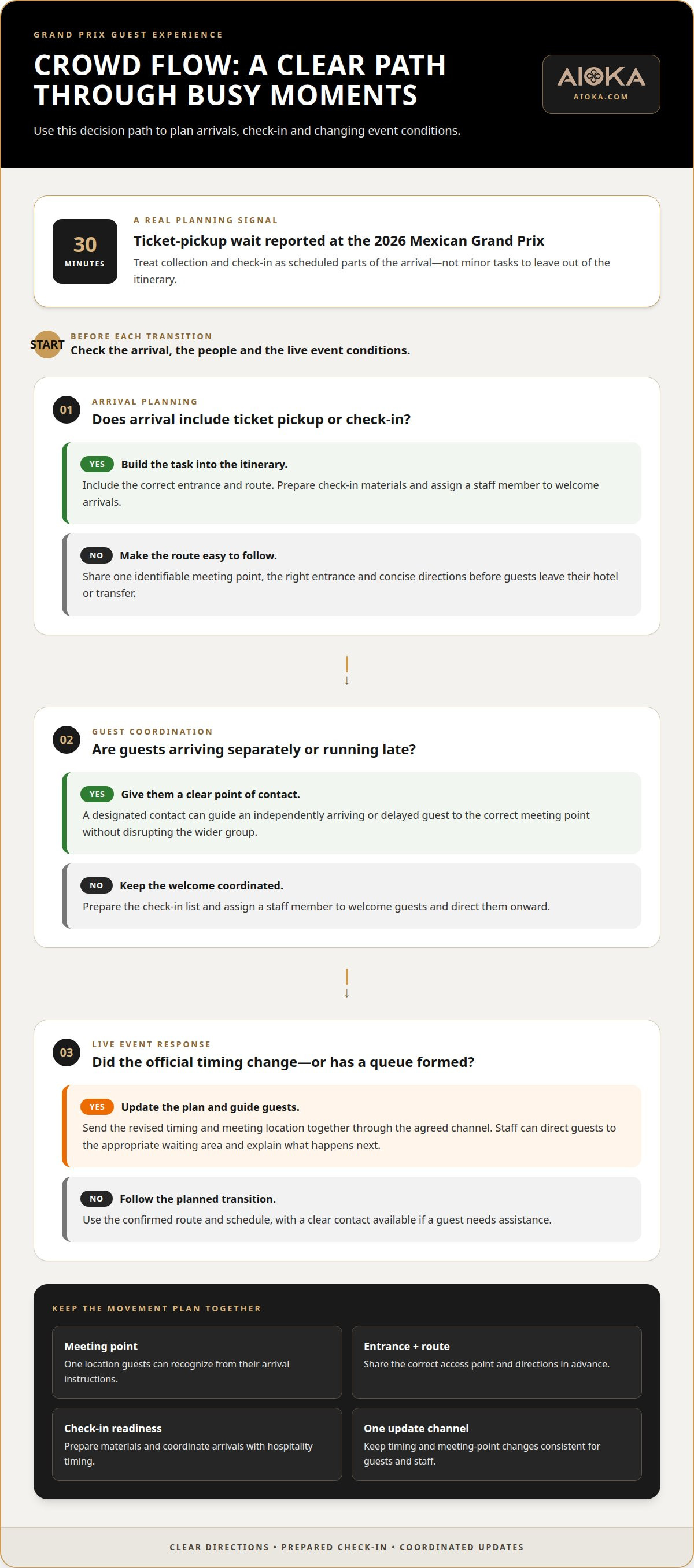
Crowd movement changes during arrivals, track sessions and hospitality openings. Plan each transition around the destination, the route guests will take and their next commitment. Clear meeting points and concise directions help guests navigate entrances and avoid unnecessary crossings through busy areas.
A reported ticket-pickup wait at the 2026 Mexican Grand Prix lasted 30 minutes. That example shows why collection and check-in deserve a place in the itinerary, rather than being treated as minor tasks. Place arrival instructions, the correct entrance and a named assistance contact in one message. Guests can then approach the appropriate point directly.
For premium hospitality, coordinate guest arrivals with the venue’s access arrangements and the hosted experience’s timing. Staggered arrivals can ease pressure at the welcome point, while a prepared check-in list helps staff identify guests and direct them onward. Keep the route to the hospitality space distinct from queues for ticket collection or public services.
• Set one meeting point that guests can identify from their arrival instructions.
• Share the correct entrance and route before guests leave their hotel or transfer.
• Prepare check-in materials and assign a staff member to welcome arrivals.
• Keep a separate contact available for guests delayed or arriving independently.
Session times can change during an official event, bringing more guests to the same point at once. Monitor the day’s schedule and communicate revised arrival windows or meeting locations through the agreed channel. If a queue forms, staff can guide guests to the appropriate waiting area and explain what happens next, preventing uncertainty from spreading.
Review the circuit plan each day, noting entrances, hospitality access and likely routes between engagements. The ticket-pickup wait at the Mexican Grand Prix illustrates why a clear arrival sequence matters. Crowd planning cannot remove every delay, but it can help guests know where to go, whom to approach and how to continue the weekend with composure.
What food, beverage, and premium hospitality options are available at F1 events?
Dining at a Grand Prix can range from dedicated restaurant access to food and beverage within premium hospitality spaces. The arrangement varies by venue and experience, so plan meals around the circuit schedule, viewing location and guest preferences. At the 2026 Singapore Grand Prix, a Paddock Club package included access to seven different restaurants, illustrating how one event can offer several dining settings.
Silverstone’s scale accommodates large hospitality villages, premium lounges and entertainment zones. This variety makes location an important consideration: choose a dining space that suits the group’s preferred atmosphere and allows a practical transition back to viewing or scheduled activities. Before the weekend, map hospitality locations against the itinerary and identify where guests will dine between race sessions.
A considered food and beverage plan starts with a few practical steps:
• Match the dining setting to the occasion, whether guests need a quieter conversation or a more social atmosphere.
• Place meal periods around key track sessions and hosted engagements.
• Share dining locations and timings in the guest itinerary.
• Gather relevant dietary preferences in advance and communicate them to the hospitality team.
Different guests may value different parts of the experience. A client-hosting group may prioritise conversation and attentive service, while race enthusiasts may prefer dining close to the circuit action. Align the setting, service style and timing so hospitality feels deliberate rather than incidental. Include beverage arrangements in the same plan, with clear details on where service is available at each scheduled time.
For a multi-day Grand Prix, vary the rhythm of dining rather than repeating the same format at every gathering. A restaurant-led meal can create a distinct occasion, while a lounge can offer a more flexible setting around the event programme. Consider a bespoke F1 hospitality plan to bring dining, viewing and guest hosting into one considered experience.
AIOKA: Curated Culinary Experiences
AIOKA brings culinary curation into the wider design of a Formula 1 weekend, where dining can support both guest comfort and meaningful business relationships. Its Curated Culinary Experiences complement Corporate Hospitality Packages, while Brand Activation Services can shape a distinctive setting for hosted engagement.
AIOKA can help shape a race-weekend gathering around considered food, premium hospitality and a coherent experience at the circuit. The right approach depends on the occasion, the guests and how dining fits alongside viewing and conversation. Thoughtful coordination makes the meal feel integral to the event, not simply a pause from it.
For a corporate gathering or brand-led moment, AIOKA can bring these elements together through its hospitality and activation offerings. Share the occasion’s priorities and the role you want dining to play. Contact AIOKA to discuss a curated culinary experience for your F1 weekend.
Shape the Next Grand Prix Around Your Guests
The next step is to define what the gathering should make possible: stronger client relationships, a distinctive brand moment, or a memorable setting for shared conversation. With that purpose established, creating a seamless F1 guest experience becomes an exercise in aligning every choice with the occasion, rather than adding activity for its own sake.
AIOKA’s Corporate Hospitality Packages, Brand Activation Services and Curated Culinary Experiences can support different ambitions, from hosting valued clients to creating a considered brand presence. The right direction begins with the people attending and the impression you want the weekend to leave.
Bring your priorities into the planning conversation, including the nature of the gathering and the role you want hospitality to play. Contact AIOKA about guest experiences to explore an approach shaped around your event. A well-considered Grand Prix weekend can become a lasting expression of how your organisation welcomes and connects with its guests.
Frequently Asked Questions
What are the key elements of a seamless Formula 1 guest experience?
Creating a seamless F1 guest experience starts with understanding what each guest needs from the occasion. A useful plan connects invitations and arrival details with access, hosting, dining and time for conversation. It also gives guests a clear way to receive updates and find assistance. For a corporate group, align the schedule with the purpose of the gathering, whether client appreciation, relationship-building or a brand presentation.
How should guests plan transportation, parking, and arrival at an F1 circuit?
Use the event’s official arrival guidance to choose the appropriate route, transport option and parking arrangement. Share the selected entrance and meeting point in advance so every guest has the same instructions. For groups arriving separately, set a clear rendezvous point away from the busiest access flow. Allow flexibility, since local traffic and circuit access arrangements can affect the journey.
How can organizers reduce wait times for entry, food, restrooms, and merchandise?
Organizers can ease congestion by directing guests to the correct service point before queues form and, where the venue allows, separating entry, dining, restroom and merchandise flows. Clear signs and visible staff help guests choose the right queue. For hosted groups, timed arrivals and pre-arranged food service can reduce pressure at shared counters. Communicate access changes promptly so guests do not join an unnecessary line.
How do F1 guest experiences differ across circuits such as Austin, Miami, and Las Vegas?
Every Grand Prix calls for a schedule tailored to its access points, circuit setting and surrounding plans. Map routes and key engagements for the specific event rather than reusing a single template.


