
F1 Corporate Incentive Trips for Teams
How a Grand Prix weekend can reward high performers, which race destinations suit incentive programmes and how hospitality and dining shape the trip.
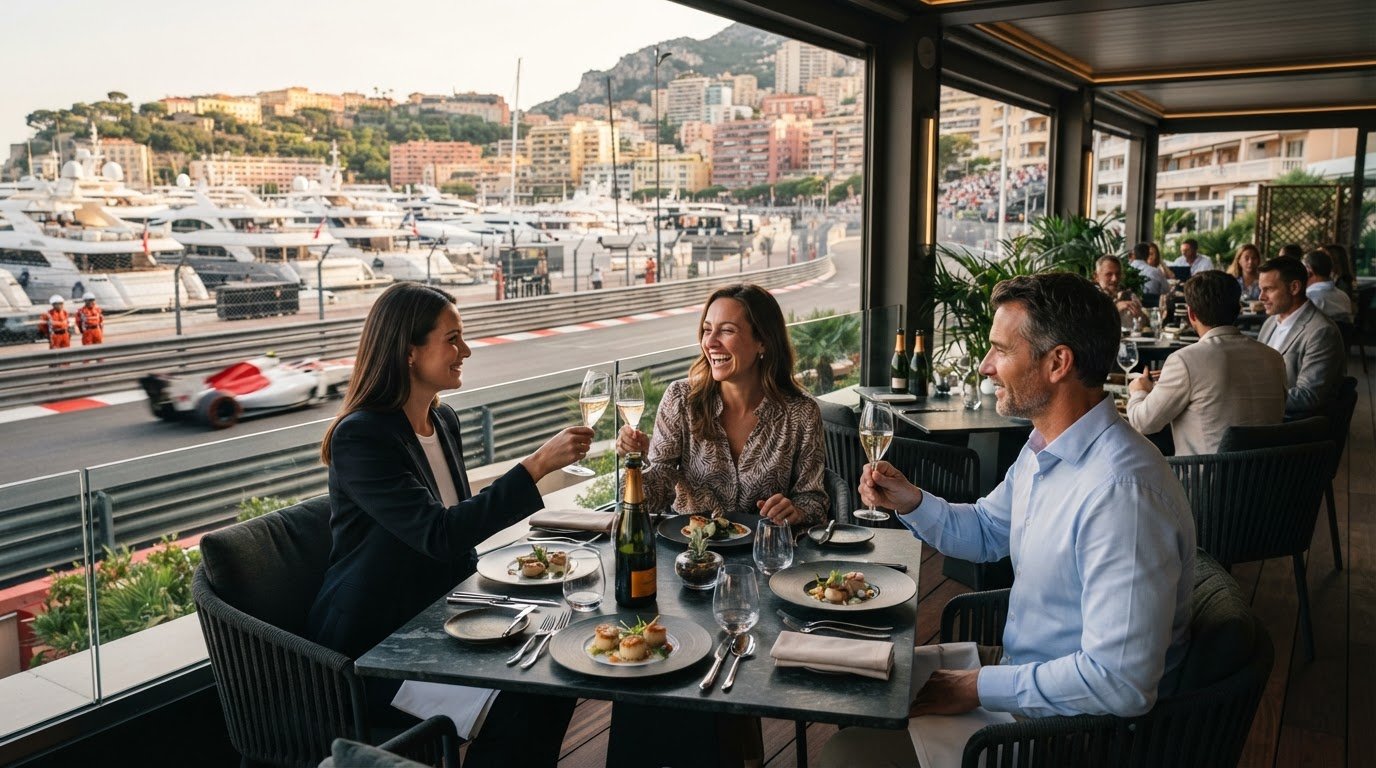
The most memorable F1 corporate incentive trips make the setting part of the reward: a Grand Prix weekend that recognises teams for meeting business targets, framed by premium trackside hospitality and considered dining. The experience can turn achievement into a shared occasion, with the race providing a distinctive backdrop for recognition and connection.
The appeal is not simply proximity to the circuit. A well-shaped programme gives colleagues and clients time to enjoy exceptional views, gather around a thoughtfully curated meal and build relationships beyond the usual meeting room, while keeping the achievement being celebrated at its centre.
This guide explores how performance-based rewards can take shape around Formula 1, what to weigh when selecting a destination such as Monaco, Singapore, Abu Dhabi or Austin, and how trackside venues and dining influence the experience. It also considers the practical elements that shape an incentive programme, helping you see where hospitality, brand presence and shared moments can align with your organisation’s aims.
Key Takeaways
• Connect the incentive to clear performance goals so the experience recognises achievement with purpose.
• Choose a Grand Prix destination around your team’s objectives, preferred activities and the character of the wider programme.
• Consider how trackside setting and dining can create time for meaningful client conversations and team connection.
• Bring hospitality, culinary experiences and brand activation together in a programme shaped around your business aims.
F1 as a performance-based employee reward
F1 corporate incentive trips can recognise employees who meet defined quotas, revenue goals or productivity targets. Their value comes from connecting a clear achievement with a distinctive shared experience.
Rewarding High-Performing Employees
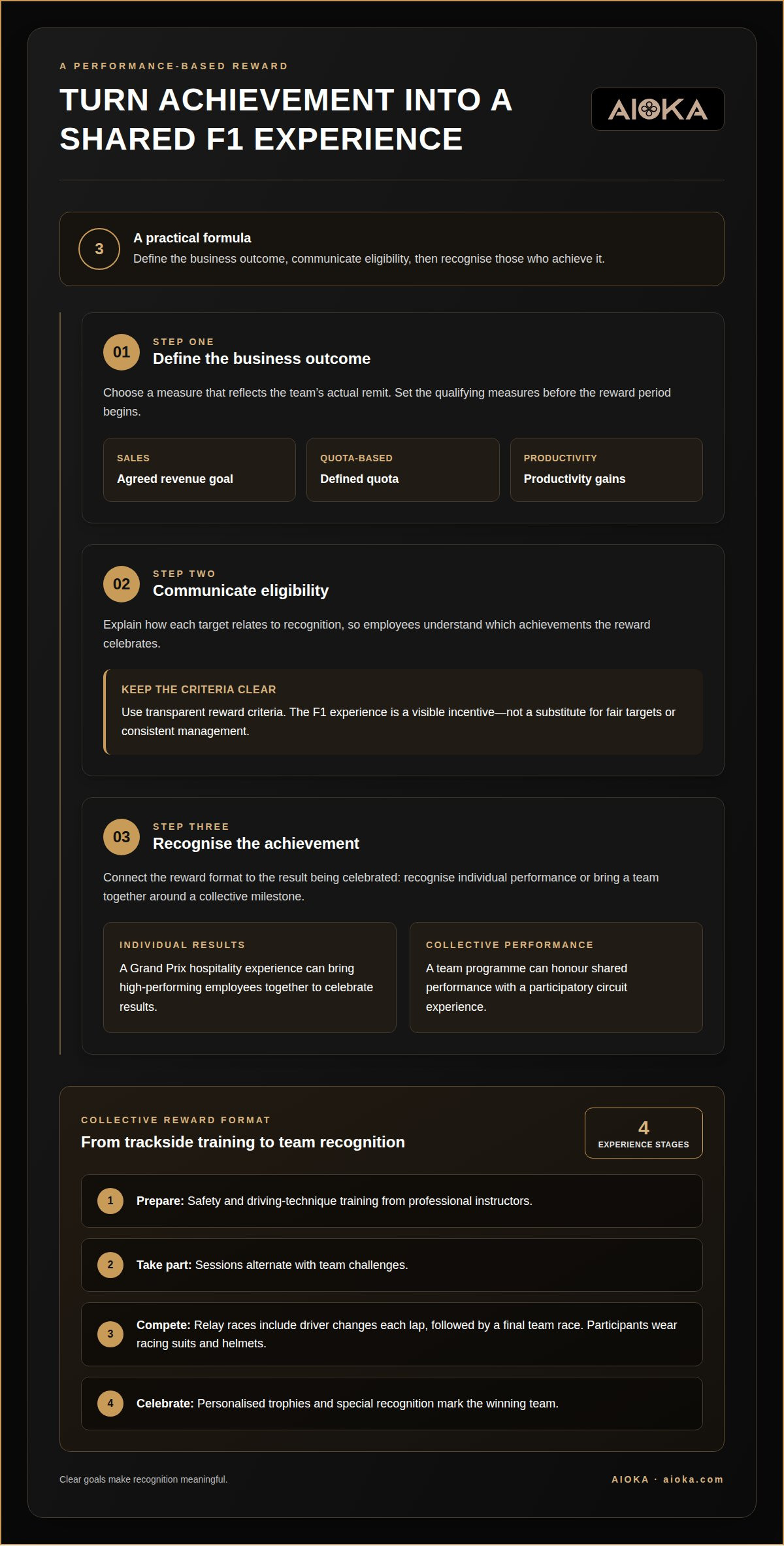
Set the qualifying measures before the reward period begins, then explain how each target relates to recognition. A sales team, for example, might qualify by meeting an agreed revenue goal, while another group earns recognition through productivity gains. Clear criteria make the reward meaningful and help employees understand which achievements it celebrates. A Grand Prix weekend can give that recognition a memorable setting.
Motivating Performance Through F1
Use the Formula 1 experience as a visible incentive, not a substitute for fair targets or consistent management. The spectacle of a race weekend, a Pit Lane Walk or a Guided Track Tour can give participants a shared milestone to work toward. For F1 corporate incentive trips, carefully designed packages can align the experience with the achievement while keeping reward criteria transparent.
A practical formula has three steps: define the business outcome, communicate eligibility, then recognise those who achieve it. Quotas, revenue goals and productivity gains measure different outcomes, so the chosen target should reflect the team’s actual remit. An employee-facing reward may recognise individual results, while a team programme can honour collective performance.
For a more participatory reward, a corporate circuit experience can add structured activities beyond watching the race. Participants receive safety and driving-technique training from professional instructors before driving. Sessions alternate with team challenges, including relay races where drivers change each lap. Participants wear racing suits and helmets before teams compete in a final race. Personalised trophies and special recognition mark the winning team.
That progression can turn recognition from a single announcement into a memorable occasion. The essential detail is the connection between performance and reward: employees should know which goal they are pursuing and how achievement will be acknowledged. A final team race, for example, suits a collective challenge, while a Grand Prix hospitality experience can bring high-performing employees together to celebrate results.
How can a provider help choose the best Grand Prix for an incentive trip?
A provider aligns the Grand Prix, hospitality, accommodation and activities with the company’s objectives. For 2027 planning, the Monaco Grand Prix weekend is scheduled for June 4-6.
Hotels and Transportation Arranged by an F1 Incentive Travel Provider
At destinations such as Monaco, Singapore, Abu Dhabi and Austin, accommodation, local transfers and corporate activities can be coordinated around the race schedule. The programme’s length, guest locations and preferred dining shape how those elements fit together. Companies should also consider cancellation terms for each trip component and travel insurance for disruptions, medical needs and itinerary changes.
Comparing Corporate Reward Travel
Unlike a retreat focused mainly on workshops or leisure, an F1 trip centres on a live Grand Prix, with hospitality and destination experiences built around it. The programme can combine race attendance, dining, cultural activities and opportunities for business conversation. Guided Track Tours, Pit Lane Walks and F1 Paddock Access may add behind-the-scenes moments, depending on the hospitality experience selected.
Guest and Event Requirements
Group size, age profile, ticket arrangements and event conditions shape the right hospitality format. Plan around the invitee list and the access included in the selected experience, distinguishing hospitality entry from general admission or grandstand seating. Define guest needs early, since those details influence accommodation, transfers and corporate activities.
F1 incentive trips reward performance through a destination programme built around a Grand Prix and shared experiences. Their distinction lies in combining the event’s spectacle with hospitality, dining and time together, rather than relying on a standalone leisure itinerary.
For 2027, most destination management companies recommend securing F1 hospitality allocations 6-9 months before the race, as marquee-event inventory is limited. A provider can weigh destination character, travel logistics, event access and the company’s recognition strategy, then shape the itinerary around those priorities.
Race destinations for incentive programs
A Grand Prix destination shapes an incentive programme beyond race day. Monaco, Singapore, Abu Dhabi and Austin each place the circuit in a distinct setting. A considered choice connects the event with the purpose of the recognition, guest interests and wider itinerary, rather than treating every race weekend as interchangeable.
Singapore shows how a circuit can define the atmosphere: its Grand Prix is a night race on the Marina Bay street circuit. That setting can suit a programme built around evening events and the city experience. In Abu Dhabi, a five-star hotel has served as the base for an incentive-trip example, illustrating how accommodation can anchor the wider schedule.
Monaco and Austin offer further options for companies seeking an iconic Grand Prix backdrop. Rather than choosing on reputation alone, shape the programme around the moments the company wants to create. The circuit setting, hospitality environment and available leisure experiences all influence the balance between race attendance and time together.
Global race destinations also allow planners to connect Formula 1 with experiences beyond the event. Cultural tours, fine dining and adventure excursions can complement the Grand Prix, giving guests a richer sense of place. In Singapore, for instance, the night-race format can frame an evening-led itinerary, while Abu Dhabi’s hotel-base example points to accommodation as a central planning consideration.
A practical destination decision considers the business purpose, guest experience and shape of the itinerary. A sales recognition programme may prioritise shared celebrations; a client-facing event may place greater weight on hospitality and relationship-building. The destination then informs how race access, dining and local activities fit together. This approach makes the Grand Prix the organising centre of the trip while preserving space for the experience the company wants to create.
Abu Dhabi is highlighted for a five-star hotel that can anchor an incentive itinerary, while Singapore’s night race suits evening-led programmes. Monaco, Singapore, Abu Dhabi and Austin are all Grand Prix destination options, with cultural tours, fine dining and adventure excursions available to complement the race.
Premium trackside venues and dining
A premium trackside setting shapes how guests experience the Grand Prix, from race views to conversation between sessions. Formula 1 hospitality can include open bars, gourmet dining and top-tier service, while the FORMULA 1 Paddock Club™ is one example of a premium hospitality environment. These details influence whether the occasion feels suited to employee recognition, client entertainment or both.
Dining also sets the rhythm of the day. One circuit experience serves lunch as a gourmet buffet in the paddock, placing guests within the event’s working atmosphere. For a corporate programme, the meal can create a natural pause for conversation, while the race action sustains a shared focus. The strongest choice connects the food, venue and schedule rather than treating each as a separate feature.
Different hospitality environments create distinct opportunities. The Paddock Club offers a premium setting, while yachts alongside the circuit provide another way to view the event. Premium grandstand seats offer a different race-day experience. These options are not interchangeable: the right setting depends on whether the priority is shared viewing, a more private gathering or a balance of business conversation and entertainment.
Consider the guest experience in sequence: arrival, time at the venue, dining, race viewing and departure. At a Singapore night race, for example, an evening-led itinerary makes the timing of dining and hospitality especially relevant. Local culture can also inform the menu and surrounding programme, adding a sense of place without drawing attention away from the Grand Prix.
The clear takeaway is to select a venue for its role in the occasion, not simply its luxury credentials. Match sightlines, service, dining and opportunities for conversation to the purpose of the gathering. To shape a considered trackside hospitality experience, connect the venue and culinary choices with the moments guests should remember.
AIOKA: Corporate Hospitality Packages
AIOKA helps companies shape Formula 1 race weekends into considered occasions for recognising employees and hosting clients. Its Corporate Hospitality Packages bring premium trackside settings into the programme, while Brand Activation Services can align a brand presence with the event. Curated Culinary Experiences add a dining dimension suited to the gathering’s purpose.
Turn to AIOKA when your plans call for a cohesive hospitality experience rather than a standalone race-day visit. The programme can be shaped around your audience, business objectives and desired balance of trackside access, brand presence and dining, connecting the Grand Prix naturally with the relationships you want to celebrate.
To discuss a Formula 1 hospitality programme for your team, contact AIOKA.
Shape the Next Milestone
Let the experience serve as the beginning of a stronger performance culture, not simply a reward remembered after the weekend. Before planning F1 corporate incentive trips, consider what participants should carry back into their work: renewed ambition, deeper trust across the team, or a clearer connection between individual contribution and shared progress. That intention can guide the tone of the occasion and the conversations surrounding it.
Set the next milestone with care. Recognition endures when the achievement is specific, the experience reflects its significance and leaders continue acknowledging contributions after guests return. A thoughtful programme can give a team more than a memorable day: it can establish a standard for celebrating success and encourage future results.
When you’re ready to shape that experience around your organisation’s ambitions, plan your F1 trip with AIOKA. Give your next milestone a setting worthy of the achievement.
Frequently Asked Questions
Why Invest in F1® Corporate Hospitality?
F1 corporate hospitality gives companies a distinctive setting for recognising achievement and hosting clients. Its value depends on the purpose: a sales reward can centre on recognition, while client hosting can create a dedicated environment for conversation. Define the intended outcome first, then shape the guest experience around it. This keeps the occasion connected to business relationships rather than prestige alone.
How far in advance should companies work with a provider to plan an F1 incentive trip?
Begin planning and securing hospitality allocations 6-9 months before the race; marquee-event inventory is limited. Early planning gives the programme room to align the destination, guest list and hospitality format before the race weekend. For example, a company inviting clients and employees may need a different itinerary from one recognising a single sales team.
Which Formula 1 Grand Prix races can a provider recommend for corporate incentive trips in the United States and abroad?
Options include Austin in the United States, as well as Monaco, Singapore and Abu Dhabi. Match the destination setting to the programme’s purpose and the guest experience. Singapore’s night race at the Marina Bay street circuit, for example, offers a different atmosphere from a gathering centred on Monaco’s Grand Prix weekend.
What is included in F1 Paddock Club, hospitality, and corporate suite packages?
Package inclusions depend on the selected hospitality arrangement. AIOKA’s Corporate Hospitality Packages include trackside viewing suites, curated gourmet dining and private client entertaining facilities. Its wider culinary concepts can incorporate full branding integration, and the company works with Michelin-starred chefs. Together, these elements give hosts a defined setting for entertaining, with dining and trackside views shaping the occasion.
How can a provider arrange official Formula 1 corporate hospitality and group packages?
A provider can shape a corporate hospitality programme around the chosen race, guest profile and event objectives. AIOKA offers Corporate Hospitality Packages for Formula 1 race weekends worldwide, with Brand Activation Services for companies seeking an integrated brand presence. Share the occasion’s purpose and intended audience so the programme can be structured around suitable hospitality and entertaining needs.
How far in advance should companies work with a provider to plan and book an F1 incentive trip?
For booking, allow 6-9 months before the race, particularly for a marquee Grand Prix. Planning can begin by identifying the preferred destination, guest profile and hospitality priorities; those decisions help clarify the format to secure. Companies coordinating several audiences can also establish whether the programme should focus on employee recognition, client hosting or a considered combination of both.


