
F1 Paddock Club Brand Activations Beyond Logo Placement
How F1 Paddock Club activations can connect trackside presence with hospitality, so a brand is experienced by guests rather than simply seen.
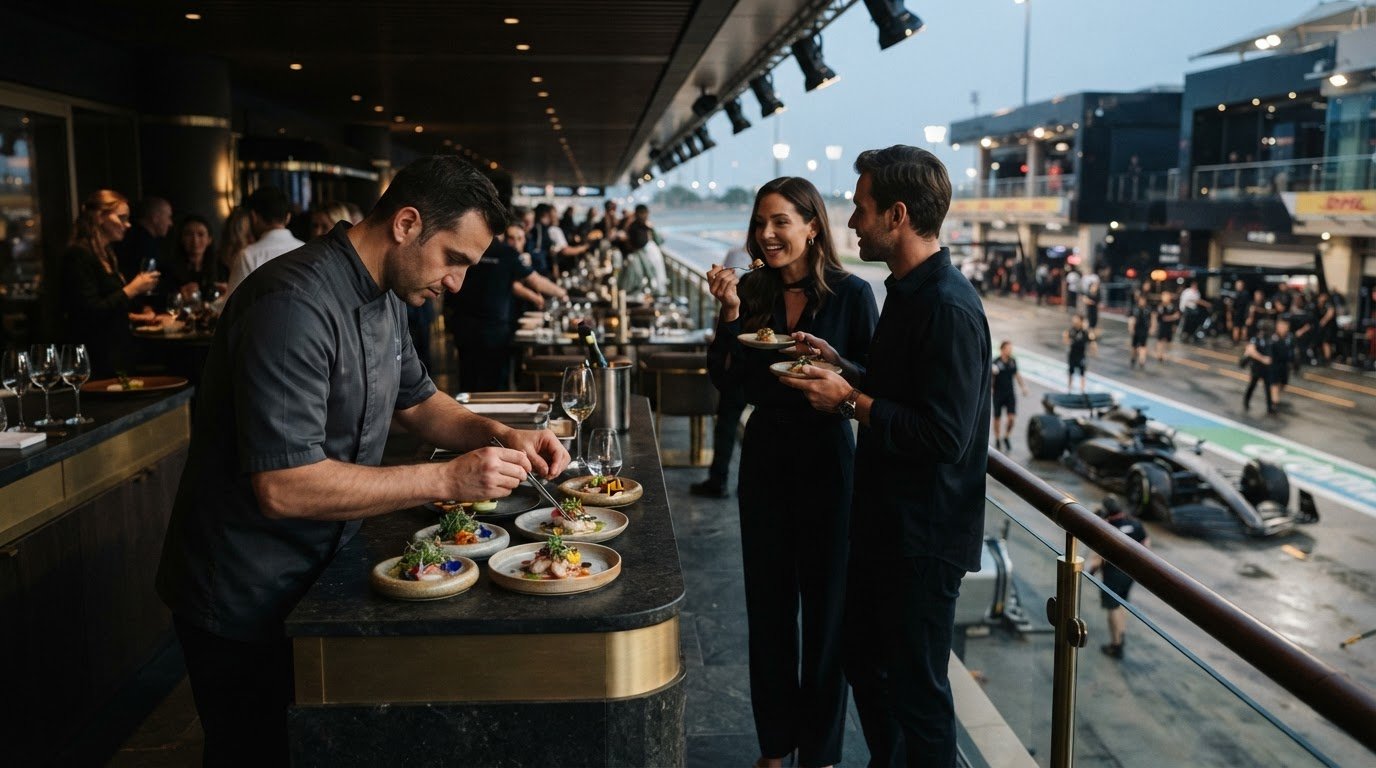
A logo can secure visibility; a considered activation gives a partnership purpose beyond it. An effective F1 Paddock Club brand activation partner connects trackside presence with hospitality, so a brand is experienced as well as seen. The strongest programmes align that experience with wider partnership objectives and the rhythm of the race weekend.
Visibility matters, but it rarely tells the whole story. The setting, audience and timing shape whether a brand presence feels distinctive or merely decorative. Trackside activity and hospitality can work together to create a coherent guest experience and give commercial partnerships room to deepen.
This article explores how immersive experiences, carefully chosen collaborations and thoughtful scheduling extend Formula 1 activations beyond logo placement. It also considers how race-weekend hospitality can support those ambitions, and where a tailored activation can bring the brand story into sharper focus without competing with the event itself.
Key Takeaways
• Build sponsorship around a meaningful role for the brand, so the partnership offers more than visual exposure.
• Shape immersive experiences around the Grand Prix destination and audience rather than repeating one activation at every race.
• Plan around team operations and limited access, coordinating campaign moments well ahead of race weekend.
• Connect hospitality, culinary experiences and brand activations to create a more coherent setting for guest engagement and business relationships.
Formula 1 sponsorship beyond logo placement
Formula 1 sponsorship extends beyond visibility when a partner gives audiences a tangible way to encounter its identity. LVMH’s global partnership with Formula 1 began in 2025 for a term of 10 years.
Race-Weekend Activation Examples
A race-weekend activation turns a sponsorship into an experience, object or moment associated with racing. LEGO’s life-sized McLaren F1 car, built from over 174,000 bricks, made engineering the spectacle. LEGO’s team-custom cars also completed a 3.3-mile lap of the Miami Grand Prix track during the Drivers’ Parade. The example matters because a distinctive activation can bring a brand into the event’s story, rather than confining it to circuit signage.
Louis Vuitton’s Formula 1 trophy trunks offer another example: craftsmanship is placed directly alongside the ceremony and its prize. LVMH’s partnership with Formula 1 also shows how a sponsor can connect its identity with several experiences, rather than relying on one logo placement. The choice of activation should reflect the brand’s role and the moment it wants audiences to remember.
Venue-Specific Partnership Opportunities
Activation partnerships differ by Grand Prix venue because each destination creates a distinct setting, audience and event rhythm. A programme designed for one circuit may not translate unchanged to another; tailoring the experience to the host destination helps it feel connected to the race weekend. In the F1 Paddock Club, opportunities may include hospitality, access to team facilities or paddock areas, and exclusive experiences, depending on the commercial rights attached to the partnership.
Those rights define what a brand may use in a Formula 1 partnership, so available opportunities depend on the agreement and rights holder. Current Formula 1 and team examples include LVMH’s global partnership, Pirelli’s role as exclusive official tyre partner since 2011, and LEGO’s collaboration with McLaren. These are distinct partnerships, not a single universal roster of Paddock Club activation partners. For a brand, the practical distinction is whether its rights support a trackside presence, a hospitality experience, or both.
Immersive brand experiences and pop-up activations
An immersive activation gives guests something purposeful to experience during a Grand Prix weekend, rather than a message to passively observe. Formula 1 partnerships can combine hospitality, digital storytelling and activity beyond the paddock, allowing one brand idea to unfold across different environments. The value lies in coherence: each encounter should feel connected to the same identity, while fitting the moment and setting.
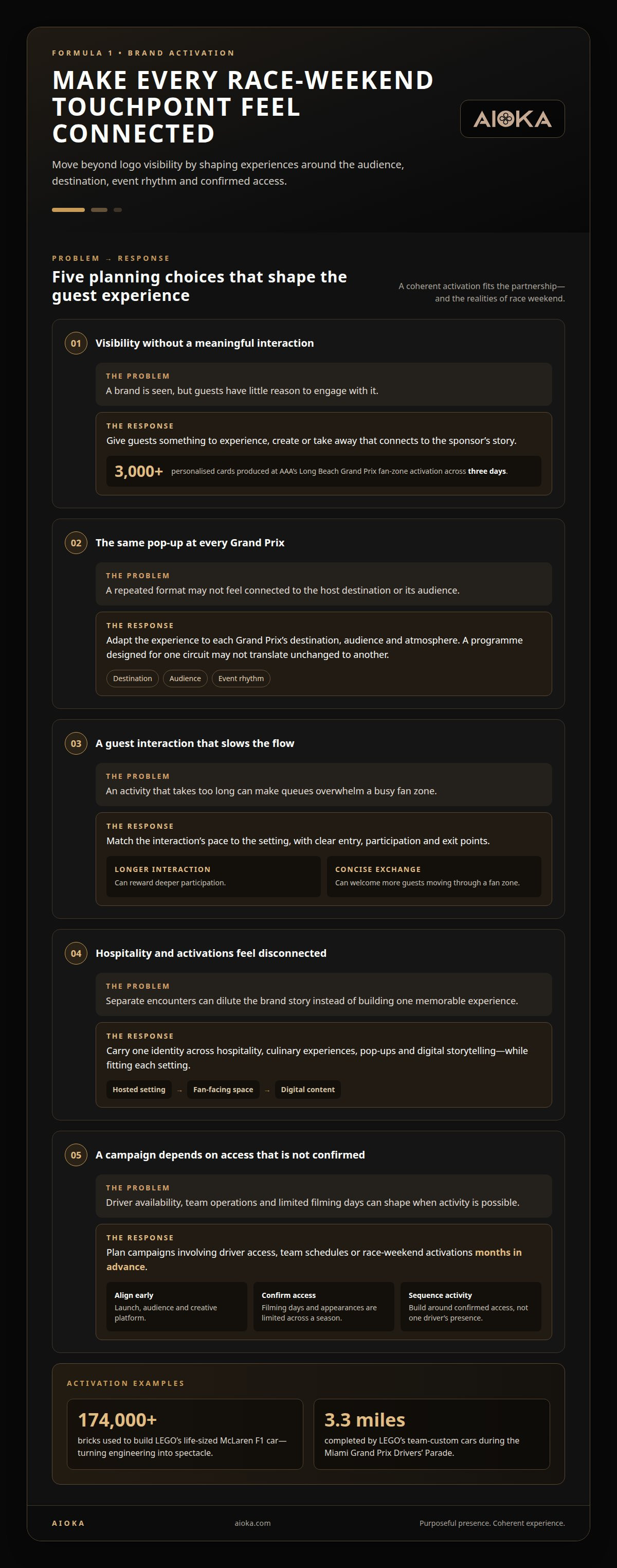
At the Grand Prix of Long Beach, AAA’s fan-zone activation produced more than 3,000 personalised cards across three days. That example shows how a simple participatory gesture can become a memorable keepsake. For other fan experiences, the interaction might invite guests to contribute, create or discover something linked to the sponsor’s story. The format should suit the audience and remain comfortable to engage with amid a busy event.
Within trackside hospitality, a cocktail experience can express a partnership through considered presentation, service and flavour. It does more than decorate a reception: it offers guests a natural conversation point and a sensory detail they can associate with the brand. A pop-up can extend that impression beyond the hosted environment, carrying the same visual identity into a fan-facing space or digital content.
The pace of an activation shapes the experience as much as the concept. A longer interaction can reward deeper participation, while a concise exchange can welcome more guests moving through a fan zone. Clear entry, participation and exit points help keep queues from overwhelming the activity. Across a race weekend, organisers can align guest experiences with the event’s changing rhythm, reserving quieter settings for conversation and livelier moments for public engagement.
Destination matters. A global programme should adapt to each Grand Prix’s audience and atmosphere rather than reproduce an identical pop-up at every circuit. For a considered blend of guest hosting and brand expression, explore race-weekend hospitality and activation planning.
Formula 1 special-livery campaigns can be supported by digital storytelling, fan engagement, limited-edition merchandise, and race-weekend hospitality. Formula 1 partnerships can support business development through executive events, customer experiences, or leadership roundtables.
Activation planning and scheduling
Formula 1 partnership campaigns involving driver access, team schedules or race-weekend activations often need planning months in advance. Early planning gives marketing teams room to align the launch, audience and creative platform with the event’s operational priorities. It also helps distinguish an iconic visual reveal from the experiences that sustain attention afterwards. A premium concept should have a clear purpose, not simply occupy a slot on the race calendar. An f1 paddock club brand activation partner can help align these moving parts with the intended guest experience.
Access shapes the schedule. Formula 1 teams allocate a limited number of filming days and appearances to each partner across a season. Driver availability and team operations influence when filming, appearances and public activations can take place. A workable plan sequences activity around confirmed access, rather than building the campaign around one driver’s presence. This distinction matters when a launch depends on a particular person or moment.
Haas’s Godzilla campaign for the United States Grand Prix in Austin combined a public livery reveal, driver appearances and fan activities. Each element served a different purpose: the reveal created a launch moment, the appearances placed drivers within the story, and the activities invited participation. Timing each component as part of one campaign helps it feel coherent rather than like a series of separate marketing obligations.
A practical planning sequence starts with the partnership’s commercial rights and intended audience. Map available access and operational windows, then assign each activity a role. A filming day can support digital storytelling, a public appearance can bring the campaign into the event, and hospitality can create space for executive engagement. Each platform needs its own content and guest flow while retaining a recognisable central idea.
Finally, schedule contingencies around the activation itself, not imagined access. If the programme relies on a driver, the team’s permitted appearance window becomes a central constraint. If the concept can also work through a reveal, branded environment or fan activity, the campaign has more than one point of engagement. The right f1 paddock club brand activation partner can help preserve continuity across the Grand Prix weekend without competing with race operations.
Brand partnerships and activation
Formula 1 partnerships work best when commercial rights, activation and audience objectives align. The agreement defines the permitted relationship; the campaign gives it form.
Program Structure and Package Inclusions
An activation partnership is a commercial arrangement with Formula 1 or a team, shaped by the rights agreed. There is no single package that applies to every brand. Hospitality rights may include team facilities, paddock areas or exclusive experiences, while partnerships can also support leadership events, customer experiences and workshops. The distinction matters: package elements follow the agreement, not a standard checklist. A season-long collaboration can connect several touchpoints, from guest engagement to retail or limited-edition merchandise, where rights allow.
Branding Rules and Partnership Management
Branding rules stem from the sponsorship agreement, which defines the commercial rights a brand may use with a team or Formula 1 rightsholder. That agreement frames how a livery, campaign identity or hospitality activation can represent the partnership. Management therefore sits with the rights holder named in the arrangement, whether Formula 1 or a team, rather than one universal Paddock Club office. Haas’s collaboration with TOHO began at the Japanese Grand Prix and returns for the United States Grand Prix in Austin in October 2026, illustrating a partnership tied to particular events.
Applying to Become a Partner
A brand seeking an activation partnership first determines whether its objectives align with Formula 1 or a team partnership. It then develops a proposal around the rights sought, intended audience and activation concept. The commercial discussion establishes which branding and experiences the agreement permits; those details shape the eventual programme. T-Mobile’s partnership with the Las Vegas Grand Prix, in place since 2022, illustrates that event partnerships can be connected to a specific Grand Prix relationship.
Partnership Benefits and Risks
A well-aligned collaboration can engage guests, support business development and extend a brand story across hospitality, events and retail. The risk is fragmentation: Formula 1 activations can underperform when campaigns are developed in isolation instead of within a structured partnership strategy. Clear rights, a coherent calendar and an activation suited to the audience help connect the investment to meaningful experiences. For tailored Formula 1 brand activation planning, align the concept with the hospitality setting and commercial objective.
AIOKA: Brand Activation Services
AIOKA brings brand activation services into the same considered setting as premium race-weekend hospitality. This is a natural fit when an activation needs to connect with hosted guest experiences. Corporate hospitality packages and curated culinary experiences can complement the activation, creating a cohesive environment for client engagement rather than reducing the partnership to logo placement.
Turn to AIOKA when your plans call for a tailored trackside location, a distinctive brand experience or a thoughtful connection between hospitality and activation. This approach suits brands seeking to host clients while expressing a clear identity throughout the race weekend.
Contact AIOKA to discuss your Formula 1 hospitality and brand activation plans.
Shape the Next Race-Weekend Experience
The next step is to define the relationship you want audiences to form with your brand. Choosing an F1 Paddock Club brand activation partner is not simply a production decision; it is a way to bring commercial intent, guest experience and the character of a Grand Prix weekend into one considered expression. A clear objective gives each creative and operational choice a reason to exist.
AIOKA can bring brand activation services together with corporate hospitality packages and curated culinary experiences, connecting brand expression with client hosting. The right emphasis depends on what your organisation wants the event to make possible, from a distinctive guest encounter to a deeper business conversation. Keep that purpose central as the concept takes shape.
When you are ready to translate that intention into a race-weekend plan, contact AIOKA to plan your activation. A considered beginning gives the experience room to feel both distinctive and true to your brand.
Frequently Asked Questions
Does it work trackside as well as in hospitality?
Yes. Trackside activity can create a public-facing point of engagement, while hospitality offers a more intimate setting for client conversation. Give each environment a distinct role, then carry a consistent brand identity between them so guests experience a connected campaign rather than separate events. AIOKA can bring brand activation and corporate hospitality together at a Formula 1 race weekend.
Which companies are current F1 Paddock Club brand activation partners?
Examples of current Formula 1 and team partnerships include LVMH, Pirelli and LEGO’s collaboration with McLaren. These are not a universal roster of Paddock Club activation partners; opportunities depend on the commercial rights in each agreement.


