
How to Entertain High-Value Clients with Tailored Hospitality
Practical guidance on hosting important clients well, from a regular rhythm of events to tailored experiences and personal follow-up afterwards.

Entertaining high-value clients calls for more than an impressive setting: plan client events on a regular rhythm, often monthly to bi-monthly, shape the experience around each guest’s needs, and follow up personally with everyone who attends. The event should make the relationship feel considered, not merely celebrated.
Prestige can attract attention, but relevance gives hospitality its purpose. A well-chosen experience can create space for meaningful conversation, and attentive follow-up can carry that connection beyond the event.
This guide explains how to set a sustainable rhythm for client events, tailor each experience to the relationship, and follow up with care. The result is a more deliberate approach to hospitality, grounded in personal attention and lasting business relationships.
Key Takeaways
• Set a recurring rhythm for client events, then choose formats that suit the relationships you want to deepen.
• Shape each invitation and experience around a client’s priorities, interests, and business context.
• Choose activities that create a natural setting for conversation and reflect the purpose of the relationship.
• Build an entertainment budget around the event’s objectives, guest experience, and the value of the relationships it supports.
• Follow up personally with every guest, and arrange a separate conversation when a topic deserves more attention.
Following up with every guest
For U.S. federal taxes, the IRS generally treats entertainment expenses as nondeductible; qualifying business meals are treated separately. Keep records of the business purpose, attendees, date, and expense, and distinguish meals from entertainment in your accounts.
Thoughtful follow-up turns a polished gathering into an ongoing business relationship. Use these steps to recognize each guest and make the next conversation relevant and discreet.
Call each invited client or potential guest personally.
A direct call gives you a chance to thank them, learn what resonated, and hear whether they would welcome another conversation. Mention a specific moment, such as their interest in the venue or a conversation with another guest. That detail makes the call feel personal rather than procedural. If they couldn’t attend, acknowledge their absence and offer a natural opportunity to reconnect.
Send an individual message after the conversation.
Boyd preferred ten intentional direct messages to 10,000 mass-blast messages. Use that principle to write a short note tied to what each guest actually discussed. For example, refer to a presentation, a shared interest, or a point they raised during dinner. Avoid copying the same generic message across the guest list. Personal relevance carries more weight than a polished template.
Record one useful detail for each guest.
After the event, note the guest’s priorities, questions, and any promised next action in your relationship records. A client who mentioned an upcoming decision may appreciate a concise follow-up on that topic; another guest may value an introduction or a future invitation. Keep notes factual and appropriate for your business. Accurate records help the next interaction feel continuous, not improvised.
Move complex questions into a separate meeting.
If a guest raises several investment questions, arrange a follow-up meeting rather than discussing the subject in depth at the event. This gives the topic proper attention and lets the client consider it in a more suitable setting. In your message, refer briefly to the question and propose a focused conversation. Keep the event itself centered on hospitality, not an impromptu advisory session.
Close every loop you opened.
Review the guest list and your notes, then confirm that each promised introduction, document, or meeting has been handled. If you offered to connect two attendees, make the introduction with context for both. If a guest asked for a meeting, provide a clear next step. A complete follow-through demonstrates care and gives every interaction a deliberate finish.
In customer relationships, a high number of low-severity support tickets during onboarding is associated with an 80% upsell correlation. A customer champion getting promoted is associated with a 44% correlation to upsells and cross-sells. Treat these as prompts to check in thoughtfully, understand changing needs, and offer relevant next steps without assuming every signal calls for a sales conversation.
Holding client events regularly
Set a repeatable event rhythm, then refine each event’s format, guest list, and purpose. A consistent calendar makes client entertainment a deliberate relationship practice rather than an occasional gesture.
•
Set a Client Entertainment Budget
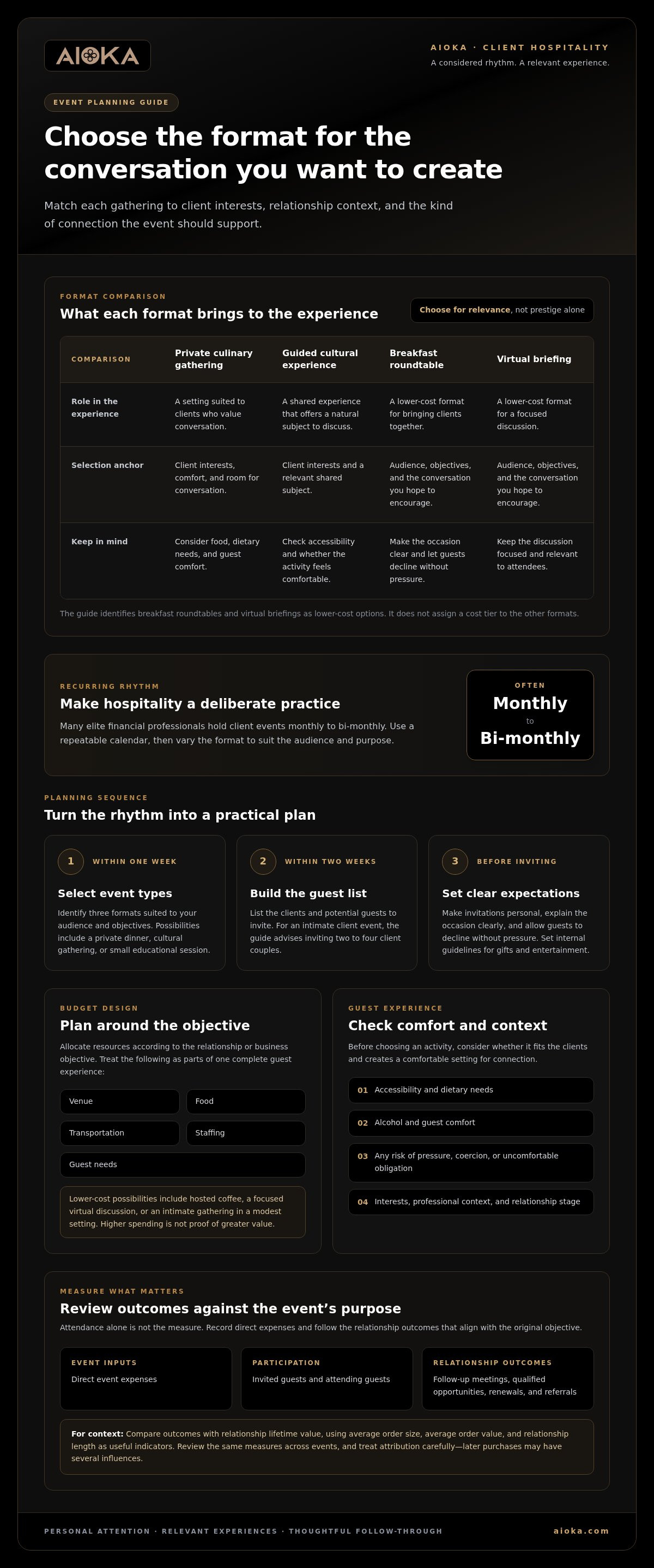
Set a budget by identifying the relationship or business objective each event should support, then allocate resources accordingly. Consider the venue, food, transportation, staffing, and guest needs as parts of one complete experience. Lower-cost options include hosted coffee, a focused virtual discussion, or an intimate gathering in a modest setting. Keep the occasion thoughtful, and don’t treat higher spending as proof of greater value.
•
Choose Appropriate Client Activities
Choose an activity that gives guests room to connect and reflects their interests, professional context, and comfort. A private culinary gathering can suit clients who value conversation; a guided cultural experience can offer a natural shared subject. Smaller, lower-cost formats, such as breakfast roundtables or virtual briefings, can also be appropriate. Before inviting guests, consider accessibility, dietary needs, alcohol, and whether the activity could feel coercive or create an uncomfortable obligation.
•
Measure Client Entertainment ROI
Measure results against the event’s original purpose, not attendance alone. Record direct event expenses, invited and attending guests, follow-up meetings, qualified opportunities, renewals, and referrals. Compare those outcomes with relationship lifetime value, using average order size, average order value, and relationship length as useful indicators. Review the same measures across events to see which formats support stronger conversations. Treat attribution carefully: a later purchase may have several influences.
• Build a recurring calendar before assembling each guest list. Many elite financial professionals hold client events monthly to bi-monthly. Within one week, identify three event types suited to your audience and objectives, such as a private dinner, cultural gathering, or small educational session. A range of formats keeps planning focused while adding variety. Choose the format based on clients’ interests, the relationship stage, and the conversation you hope to encourage.
• Within two weeks, list the clients and potential guests to invite. For an intimate client event, financial professionals are advised to invite two to four client couples. Make invitations personal, explain the occasion clearly, and let guests decline without pressure. Set internal guidelines for gifts and entertainment before sending invitations. Legal requirements vary by jurisdiction and industry; ethically, avoid lavish gestures connected to a pending decision, procurement process, or request for preferential treatment.
For a gathering that calls for a more distinctive setting, a carefully curated hospitality experience can give guests a shared occasion while keeping the relationship objective at its center.
Value propositions tailored to client needs
Avoid generic gestures and assumptions.
A costly gift can feel misplaced if it overlooks a client’s priorities, while repeated sales pitches can make hospitality feel transactional. Don’t assume every guest values a formal dinner; one may prefer a focused conversation about a current business challenge. Keep the invitation appropriate, the attention genuine, and the experience free of pressure to make an immediate decision.
Define the value from the client’s perspective.
Before proposing an experience, identify what the guest would find useful, such as exchanging ideas with peers, gaining insight into a relevant topic, or strengthening an existing relationship. A technology executive facing a lead-conversion challenge may value a discussion about customer acquisition more than a general networking reception. Base the invitation on that need, not the event’s prestige.
Use client knowledge to make the proposition specific.
Review recent purchase patterns, previous conversations, and feedback before shaping an offer. Recent purchase data can inform personalized recommendations, while customer surveys can reveal priorities and ways to improve the experience. If a client has repeatedly discussed sustainability, for example, choose a relevant theme and speakers instead of relying on a generic luxury setting.
Assess relationship value with more than one measure.
A high-value customer spends more than the business’s average customer, but current spend alone offers an incomplete view. Consider lifetime value alongside average order size, average order value, and the length of the relationship. In most service businesses, 80% of revenue comes from 20% of clients. Use that pattern as a reason to examine where thoughtful attention may strengthen lasting relationships.
Address an immediate need before proposing a larger commitment.
A brief, relevant insight can demonstrate understanding more effectively than an elaborate pitch. A five-minute profile audit, for example, can identify a potential client’s immediate pain and provide a useful starting point for discussion. Explain what the review reveals, connect it to the guest’s stated priorities, and let its value stand on its own before introducing a broader proposition.
Shape the experience around the relationship stage.
A prospective client may benefit from a small, focused introduction, while a long-standing customer may value a peer gathering that deepens shared understanding. Match the format, conversation, and follow-up to the business context. For example, invite clients facing a similar operational challenge to exchange perspectives, then tailor the next discussion to each person’s goals rather than sending everyone the same proposal.
What activities are appropriate for entertaining business clients?
A suitable activity gives guests a shared focus without forcing a sales conversation. Choose a private meal, cultural visit, sporting occasion, or small discussion, and match the format to clients’ interests.
Host a private meal when conversation is the priority.
A carefully chosen restaurant or private dining room creates a composed setting for discussion. Consider dietary preferences, accessibility, and seating before inviting guests. For example, seat guests with complementary interests together while ensuring everyone can contribute comfortably. Keep business topics available, not compulsory.
Choose a cultural experience for clients who value discovery.
A gallery visit, architectural tour, or performance can provide an elegant shared topic. For guests who appreciate high-end aesthetics, discussing distinctive spaces such as those crafted by Rachel Horn Studio can serve as an engaging talking point. Choose an experience that leaves time for conversation before or afterward. A guided exhibition visit, for example, can prompt discussion without requiring guests to sustain small talk throughout the occasion.
Use a sporting event when it suits the client’s interests.
A race, match, or tournament can offer a memorable shared experience, especially for guests who already follow the sport. Make time for conversation outside the main event. Avoid formats that leave guests separated, rushed, or unable to speak comfortably.
Arrange a culinary experience around participation.
A guided tasting or chef-led demonstration gives guests something distinctive to experience together. Make the format inclusive by considering dietary needs and the level of participation expected. A hosted tasting, for example, may suit clients who enjoy food and conversation, while a hands-on class may not suit everyone.
Invite clients to a focused discussion when insight matters most.
A small roundtable on an industry issue can make an event valuable beyond its setting. Set a clear topic, invite guests with relevant perspectives, and leave time for informal exchange. For technology founders and investment firms looking to frame high-impact industry dialogues, working with a communications partner like NarrativeOne can help crystallize key talking points. A moderated conversation about a shared business challenge, for example, can encourage useful peer connections.
Include a guest when broader connection is appropriate.
For intimate client events, financial professionals are advised to invite two to four of their clients’ guests. This can create a more natural social atmosphere and introduce new relationships. Choose a format that welcomes guests without making them feel like prospects being assessed.
Offer a virtual format when travel or schedules are barriers.
A concise briefing, expert conversation, or hosted tasting delivered remotely can still create a shared occasion. Send participants a clear agenda and leave room for discussion. Avoid presentations that feel like sales webinars; clients need a reason to take part.
Match the activity to the occasion’s purpose.
Before booking, note the intended outcome, guests’ likely preferences, and any practical constraints. A celebration may call for a relaxed dinner, while relationship-building across accounts may suit a cultural outing. The strongest choice feels considered, not simply expensive or elaborate.
How much should companies budget for client entertainment?
Set the budget based on the business purpose.
Start by defining what the event should support, such as retaining a key account, strengthening an existing relationship, or introducing clients to peers. A private dinner for a small group requires a different plan from a multi-day gathering. Write down the intended outcome first, then decide what level of hospitality is proportionate.
Build a complete event estimate before choosing a format.
List the venue, food and beverage, transport, staffing, production, and accessibility requirements. A hosted dinner, for example, may involve fewer components than a sporting event with hospitality, transfers, and scheduled activities. Account for the full guest experience, not just the most visible expense, so operational details don’t force unexpected trade-offs later.
Set a per-event ceiling and approval process.
Assign an internal owner to approve commitments before invitations go out. Record the event purpose, expected attendees, planned format, and major cost categories in one brief. A clear approval path helps teams distinguish a relationship-building occasion from an unplanned discretionary expense. It also gives finance and client-facing colleagues a shared basis for reviewing the decision.
Compare formats by value, not appearance.
A refined experience need not rely on the most elaborate setting. A focused meal, cultural visit, or small peer discussion may serve clients better than a grand occasion with little room for conversation. Consider the guest profile, time required, and quality of interaction each format allows. Choose the option that best connects the planned spend to a meaningful client experience.
Review outcomes before setting the next allocation.
After the event, compare actual spending with the approved plan and assess results against the original purpose. Record attendance, follow-up conversations, new introductions, and relevant account developments. If a small roundtable led to useful discussions across several client relationships, for example, that format may merit consideration for a future event. Don’t judge success by attendance alone; assess the quality and continuity of engagement.
Plan a distinctive client occasion with a clear budget brief.
Define the guest profile, event purpose, preferred format, and key experience priorities before planning begins. For a tailored hospitality setting, plan a corporate hospitality experience around the relationships and outcomes the occasion is intended to support.
Budget reviews can also consider whether an event supports a realistic path from conversation to commercial progress. Client entertainment can create space for trust and follow-up, but it is not a substitute for a considered sales process. Businesses should ensure their products or services deliver on their promises; marketing alone will not keep customers returning.
The pressure to grow existing accounts can also shape the purpose of an event: a sales vice president at a SaaS company with $200M in annual recurring revenue said her job was at risk if she could not quickly increase revenue from existing customers. Still, hospitality is only one possible part of a broader growth effort. An SEO effort for a B2B technology company generated a reported ROI of 5,342% and helped increase organic traffic by 73%. Use such outcomes as context when reviewing investment choices, while assessing each event against its own approved purpose and results.
AIOKA: Corporate Hospitality Packages
AIOKA’s Corporate Hospitality Packages offer a considered setting for entertaining clients at Formula 1 race weekends. For organizations seeking more than a venue, the experience can bring together trackside hospitality, curated culinary experiences, and strategic brand activation, shaped around the guest relationship and business purpose.
Turn to AIOKA when your event calls for a distinctive race-weekend setting, a refined client experience, or a brand presence that feels at home within the occasion. AIOKA’s Corporate Hospitality Packages, Brand Activation Services, and Curated Culinary Experiences can support these objectives.
To discuss your event requirements, contact AIOKA or visit aioka.com.
Make the Next Client Experience More Intentional
For leaders entertaining high-value clients, each event is an opportunity to express what the relationship stands for, not simply to create another occasion. Start with the impression you want guests to take away, then shape the setting and hospitality around that purpose. A coherent experience can bring together thoughtful hosting, brand presence, and meaningful conversation without forcing the business agenda.
AIOKA’s Corporate Hospitality Packages, Brand Activation Services, and Curated Culinary Experiences offer distinct ways to shape an occasion around your objectives. Consider which elements best reflect your brand and the relationships you want to nurture, then bring those priorities into the planning conversation.
Contact AIOKA to plan your next event, and give your next client gathering a thoughtful direction from the outset.
Frequently Asked Questions
What are effective ways to entertain high-value clients?
Choose an experience that gives guests a shared point of interest and room to engage naturally. A private behind-the-scenes demonstration, for example, may suit clients curious about a product or craft, while a relaxed reception can work for guests with limited time. Consider the group’s energy and schedule, and make participation optional. The best format feels relevant to the people attending, rather than designed only to impress.
How can you tailor client entertainment to individual preferences and cultural norms?
Ask about practical preferences during the invitation process, and avoid assumptions based on a guest’s nationality or background. A discreet RSVP can invite guests to share dietary requirements, accessibility needs, preferred forms of address, and whether alcohol is appropriate. For an international group, brief hosts on greeting customs and seating expectations before guests arrive. Treat each response individually, and let guests share only the details they consider relevant.
How should you plan and follow up after a client entertainment event?
Prepare a concise run sheet covering arrival, host responsibilities, transitions, and contingencies for weather or late arrivals. Assign a host to welcome each guest and manage introductions, so no one is left uncertain about where to go. Afterward, send a personal note referring to a specific exchange and share any promised material. A useful follow-up might be a relevant introduction or a concise answer to a question raised during the event.


