
Ideas for Engaging Race Fans Through F1 Sponsorships
How sponsors can move beyond logo placement at a Grand Prix, with digital, photo and hospitality ideas that give fans a real reason to take part.

A logo in view is not yet an experience. The strongest F1 sponsorship activation ideas give fans a reason to participate, share, or return to the brand after the race. They connect a clear business objective with fan-relevant moments, thoughtfully designed digital content, and experiences worth remembering.
That distinction matters: visibility can introduce a brand, while meaningful participation can deepen attention and trust. Start with what the audience will value, then build the activation around that purpose rather than adding brand presence for its own sake.
Explore ways to build that connection through digital storytelling, distinctive photo experiences, and authentic links to the sport. You’ll also find practical ways to extend engagement beyond race weekend and assess whether an activation is meeting its goal.
Key Takeaways
• Set a clear business objective before shaping the activation, and align team-channel concepts with the team’s narrative and approval process early.
• Design digital and hybrid experiences to invite meaningful participation, then give fans a reason to stay engaged beyond race weekend.
• Make branded photo moments worth sharing by connecting the visual experience to the fan’s own connection with the sport.
• Prioritise relevance over visibility, and consider how hospitality or a carefully curated activation can deepen relationships with guests and clients.
1. What Makes a Sponsorship Activation Work?
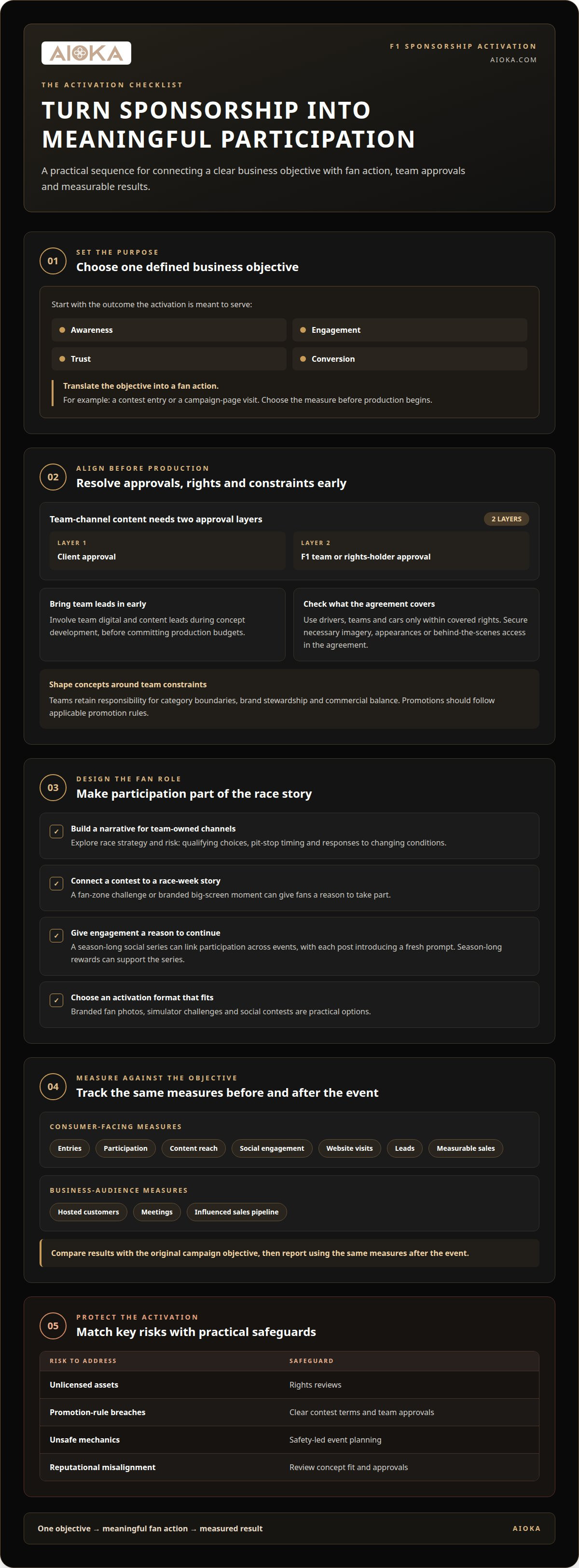
An effective F1 activation begins with one defined business objective: awareness, engagement, trust, or conversion. Translate it into a fan action, such as a contest entry or campaign-page visit. A season-long social series can extend participation. Choose a measure before production begins, so creative and reporting serve the same purpose.
Promotions should follow applicable promotion rules. Team-channel content requires two approval layers: client approval and F1 team or rights-holder approval. Teams retain responsibility for category boundaries, brand stewardship, and commercial balance. Shape concepts around those constraints before final creative.
Bring team digital and content leads into concept development before committing production budgets. For team-owned channels, build a series around race strategy and risk: explain qualifying choices, unpack pit-stop timing, and explore how a team responds to changing conditions. Use drivers, teams, and cars only within the rights covered by the sponsorship agreement. Secure any necessary imagery, appearances, or behind-the-scenes access in that agreement.
Practical activations include fan-zone challenges and branded big-screen moments. A contest can connect participation to a race-week story. Season-long rewards can link social participation across events, with each post introducing a fresh prompt. Track entries, participation, and subsequent actions against the original objective.
Branded fan photos, simulator challenges, and social contests offer practical activation formats. Measure results through participation, content reach, social engagement, website visits, leads, or measurable sales. For business audiences, record hosted customers, meetings, and influenced sales pipeline. Compare results with the campaign objective, then report the same measures after the event.
Key risks include unlicensed assets, breaches of promotion rules, unsafe mechanics, and reputational misalignment. Address them through rights reviews, team approvals, clear contest terms, and safety-led event planning.
2. Digital, augmented reality, and hybrid experiences
Strong F1 sponsorship activation ideas give the audience a useful role, rather than placing branded assets on a screen. A Formula 1 companion experience could invite fans to predict a strategic decision, explore a car’s design, or choose which race moment to revisit. Each interaction should lead naturally to a next step, such as viewing a story, sharing a result, or entering a campaign. This makes fan engagement part of the experience, not an afterthought.
Augmented reality can bring a race narrative into a fan’s surroundings. A phone-based overlay, for example, might reveal a stylised circuit map, explain a corner, or show how a pit-stop sequence unfolds. A hybrid installation can pair that digital layer with a physical display at a race-week event, inviting guests to explore the same branded story in person and online. Keep the interaction intuitive, especially when fans are moving between sessions.
Personalisation can begin with fan-selected interests rather than assumptions about each individual. A visitor who chooses car design could receive related content, while a strategy enthusiast sees explanations of race decisions. AI can help organise those pathways, but the experience should make its purpose clear and avoid presenting generated commentary as official team insight. Among the more adaptable F1 sponsorship activation ideas, a 5G-enabled concept could feature live, data-rich content or responsive displays, with a useful experience that does not depend on one network connection.
At a hospitality setting, digital elements can complement live entertainment without competing with conversation. A curated tasting might pair a menu with a digital story about precision, preparation, and teamwork. A hybrid version can share selected content with remote guests, extending the occasion beyond the venue. For brands developing these moments, a considered event experience can bring digital interaction, physical atmosphere, and guest engagement into one coherent composition.
3. Branded fan photos and photo galleries
A fan photo gives race attendees a personal keepsake and a reason to share the moment. Design a branded portrait setting around an approved visual asset, such as a circuit-inspired backdrop or team-colour lighting. Keep the sponsor mark visible but well composed, so the fan remains central. Offer a digital copy through a simple gallery, with a clear way to view and share it. The experience should feel like a portrait made for the guest, not an advertisement placed behind them.
Plan the gallery as part of the guest journey, not merely as a collection of images. A short sequence might move from arrival portraits to candid shots beside a display, then to a final image featuring the event identity. Organise galleries by race weekend or activation, and give each set a distinctive title. This makes content easier to revisit and gives social engagement a natural prompt. At a fan-zone launch, for example, guests could share their portrait with a caption about their favourite race moment.
A food and beverage partnership can add another sensory layer to a photo opportunity. A tasting station might pair a signature drink or small plate with a setting inspired by the host city. Guests can take a portrait with the presentation, then browse a gallery connecting the culinary moment with the event. The partnership works best when the product belongs naturally in the occasion and service remains effortless, without interrupting the race-day experience.
Extend the idea into a year-round branded fan destination, such as a temporary city-centre lounge or recurring watch-party setting. A changing photo backdrop can mark each Grand Prix, while a digital gallery gathers portraits and event stories across the season. This creates an opportunity to reconnect with fans after race weekend and gives each new launch a fresh visual identity. Keep the format recognisable, while letting local food, design, and race narratives shape each edition.
4. Authenticity and fan relevance
Fans respond to a story that reflects the sport, not a logo placed beside it. Build an activation around recognisable F1 elements, such as car branding, circuit design, or telemetry. Then connect that element to a customer challenge. A precision-focused brand, for example, could tell a story about how teams interpret changing race data. The marketing message earns its place by adding context rather than interrupting the experience.
Start with a fan interest, then make the brand’s role easy to understand. A race-strategy feature could show how teams weigh risk, while a mobility brand might explore the decisions behind efficient movement. These ideas work when they illuminate something real, not when they claim an unsupported connection. Keep the message specific, use language fans recognise, and let the sport remain the subject.
Behind-the-scenes content can offer an exclusive perspective when the relevant access and rights are part of the partnership. A short feature might follow a team role, explain a preparation ritual, or reveal how a component supports performance. Don’t present staged access as spontaneous or imply that a driver endorses a product without permission. That distinction protects trust and keeps the story credible for fans and partners.
Before launch, use three practical tests: Does the idea make sense to an F1 fan? Does the brand contribute something useful? Can the experience be explained without inflated claims? A trackside installation, for instance, might invite visitors to interpret a simplified telemetry display, then connect their choices to the sponsor’s expertise. Review the concept with fan context in mind, and refine any element that feels like advertising without a meaningful role. Create a more fan-relevant brand activation through a concept that gives the sport and sponsor a coherent place.
AIOKA: Corporate Hospitality Packages
AIOKA offers Corporate Hospitality Packages for brands hosting clients and guests at Formula 1 race weekends. They can complement an activation strategy when the objective extends beyond fan visibility to relationship-building, executive conversations, or partner engagement. AIOKA also provides Brand Activation Services and Curated Culinary Experiences, bringing guest experience and brand storytelling into the same occasion.
Consider AIOKA when your plans call for a considered setting alongside a sponsorship activation, or when hospitality is central to your business objective. AIOKA brings race-weekend hosting together with curated brand experiences, keeping the purpose of the gathering clear.
Contact AIOKA to discuss your Formula 1 hospitality or activation plans.
Shape the Next Race-Week Conversation
The next step is to treat your sponsorship as a relationship with an audience, not a placement to be filled. Choose the feeling or action you want fans to carry beyond race weekend, then let that intention guide the creative decisions, guest experience, and follow-through. The strongest F1 sponsorship activation ideas are distinctive because each element belongs to the same carefully considered story.
Before planning begins, bring the relevant decision-makers together around a shared story. A clear creative direction helps marketing, hospitality, and activation teams make choices that feel coherent to guests and credible to fans. It also gives the campaign room to evolve across race moments without losing its identity.
For a considered next step, contact AIOKA to plan your activation. A clear brief can open a more purposeful conversation about the experience you want to create. Let the next race weekend begin with an idea worthy of its audience.
Frequently Asked Questions
What Makes a Sponsorship Activation Work?
A sponsorship activation works when fans receive a clear benefit and the brand has a credible role in delivering it. Map the experience from first exposure to follow-up: a fan might see a campaign post, take part at an event, then receive related content afterward. Remove unnecessary steps, make the brand’s contribution visible, and ensure every touchpoint feels part of one coherent experience.
How can sponsors activate F1 partnerships at races and fan events in the United States?
At U.S. races and fan events, design around the venue’s audience and movement. A sponsor might create a hosted gathering near a city race-week hub, combining a concise interactive feature with space for client conversations. Define arrival flow, staffing roles, and queue or weather contingencies before opening. Adapt language, food, and local references to the host city rather than repeating the same activation unchanged across markets.
What digital, social media, and influencer activations work well for F1 sponsors?
Digital and creator activations work best when each channel has a distinct role. A creator could interpret a race weekend through a personal lens, while the brand provides relevant context or access. Invite audience participation with a prediction prompt or fan-submitted topic, then shape approved responses into follow-up posts. Agree on tone, usage permissions, and publishing responsibilities before filming so the collaboration feels natural and coordinated.
How should a brand plan and execute an F1 sponsorship activation campaign?
Plan in sequence: define the intended audience and business outcome, select the race-week setting, then assign an owner to each task. Schedule creative development, approvals, event operations, publishing, and post-event reporting. A hospitality activation needs a different guest journey from a public-facing social campaign. Afterward, hold a debrief to record decisions, practical lessons, and refinements for the next event.
What are examples of successful F1 sponsorship activations and their results?
Examples include branded fan photos, simulator and pit-stop challenges, reaction-time games, and social contests. Measure results through participation, content reach, social engagement, website visits, leads, and sales.


