
Plan VIP Guest Messages, Preferences, Security and Arrival Support
How to prepare VIP guests before an event, from tailored messages and preference surveys to security briefings and a dedicated arrival liaison.
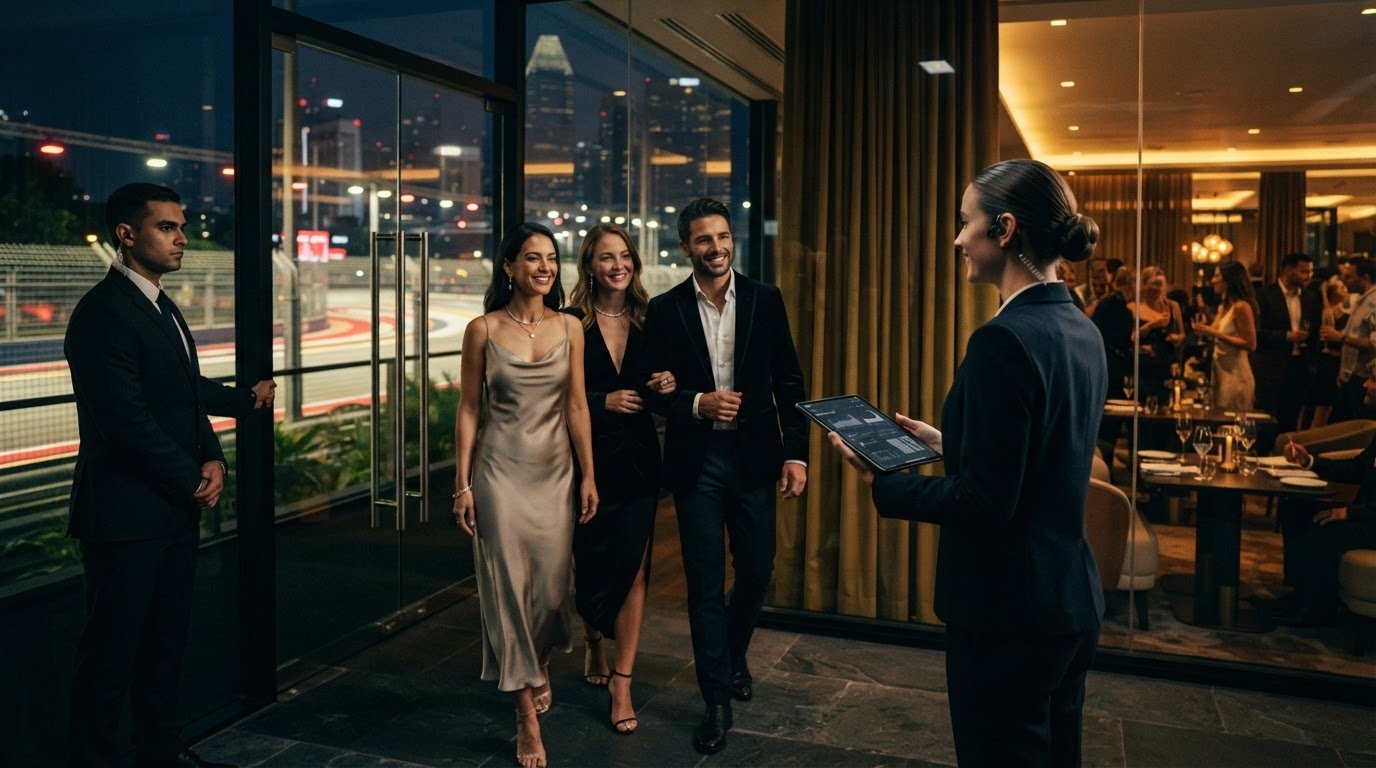
A VIP invitation list is more than a record of names: it is the operating plan for each arrival. Keep one controlled record of invitations and RSVPs, tailored messages, guest preferences, access requirements, and the person responsible for arrival support. A pre-event communication plan for VIP guests brings these details together in a coordinated sequence, with relevant access protocols shared with security.
Personal attention matters, but it works best when every detail is managed discreetly and consistently. A considered approach helps your team prepare guests without overwhelming them and gives staff a clear view of each arrival’s needs.
Shape the invitation list, send concise directions and access information, gather preferences through a survey, coordinate with security, and assign a dedicated liaison. Together, these steps support a composed arrival and a personal experience from invitation to welcome.
Key Takeaways
• Maintain one invitation list that tracks responses, access needs, and the owner of each guest relationship.
• Use a concise, tailored message for arrival directions and entry details, then gather preferences through a focused survey.
• Coordinate guest information and arrival protocols with security in advance, so the welcome remains both discreet and considered.
• Assign a dedicated liaison to greet VIP guests, anticipate their needs, and guide them through the event.
1. Personalised pre-event messages with venue directions and VIP access details
Email works well for invitations, confirmations, and detailed arrival instructions. A mobile event app can bring the schedule and venue information together, while personalized notifications can share relevant updates. Choose channels your guests can access easily, and keep key details consistent across them.
Contact guests once the invitation details and event arrangements are ready, then send updates whenever information changes. Complete guest-management preparation during the week before the event, including a final review of names, responses, and arrival requirements. This gives your team time to align messages with the arrangements guests will encounter.
A personalized invitation should acknowledge the guest’s role or relationship with your organization, then state the event schedule, dress code, parking arrangements, and any exclusive sessions. Finish with a clear RSVP request. An online invitation platform can organize the guest list, send tailored invitations, and track responses in one place.
Segment the list by the details that shape each guest’s experience, such as their role, contribution, access needs, or logistical preferences. Address guests by name and tailor the invitation’s context; one guest may value an introduction, while another needs precise arrival directions. Keep the list current as responses arrive.
Send one clear arrival message with venue directions, dedicated entrance details, reserved parking instructions, and any access codes. If a guest cancels, update the RSVP record and adjust relevant arrival information. Send direct updates to guests affected by changes or special requests, and route practical requirements to the responsible team.
Common risks include outdated directions, inconsistent access details, missed RSVP changes, and sensitive codes shared too broadly. Use an invitation template for essential information, a guest-list tracker for responses, and the event app for schedule updates. A brief survey can capture gift preferences, while past-event preferences can guide personal touches.
2. Using pre-event surveys to learn guest preferences
A focused pre-event survey turns personal attention into practical preparation. Ask about dietary requirements, allergies, accessibility needs, preferred forms of address, and interests relevant to the occasion. Tie each question to an action your team can take, such as planning a menu or arranging a quieter place to meet.
For food planning, distinguish an allergy from a preference and invite guests to describe any requirements in their own words. Share relevant responses with the catering team well in advance, then review the menu for dietary diversity, cultural preferences, and health requirements. A guest who avoids a particular ingredient needs a clear response, not an assumption based on a broad category. Curated culinary experiences can make those considerations part of the event’s hospitality.
Use a short survey with clear prompts and a discreet way to respond. For example, ask whether a guest has dietary requirements rather than requesting unnecessary medical details. Explain why you are collecting each answer and who will use it. In the United States, privacy and consent expectations depend on context. As a careful practice, make the purpose clear, collect only relevant information, restrict access, and respect guests’ communication preferences.
Notes from past events can make future invitations more considered, provided they remain accurate and appropriate to use. Record practical preferences, such as a preferred name, a recurring dietary request, or interest in a particular session. Before relying on an older note, invite the guest to update it. Preferences change, and a concise confirmation avoids turning a thoughtful gesture into an awkward assumption.
Close the loop by assigning each response to the person responsible for acting on it. A dietary note should reach catering; an accessibility request should reach the relevant event lead. Keep sensitive details out of broad staff messages, and share only the operational instruction needed, such as providing a suitable meal. This creates a clear path from survey response to guest experience.
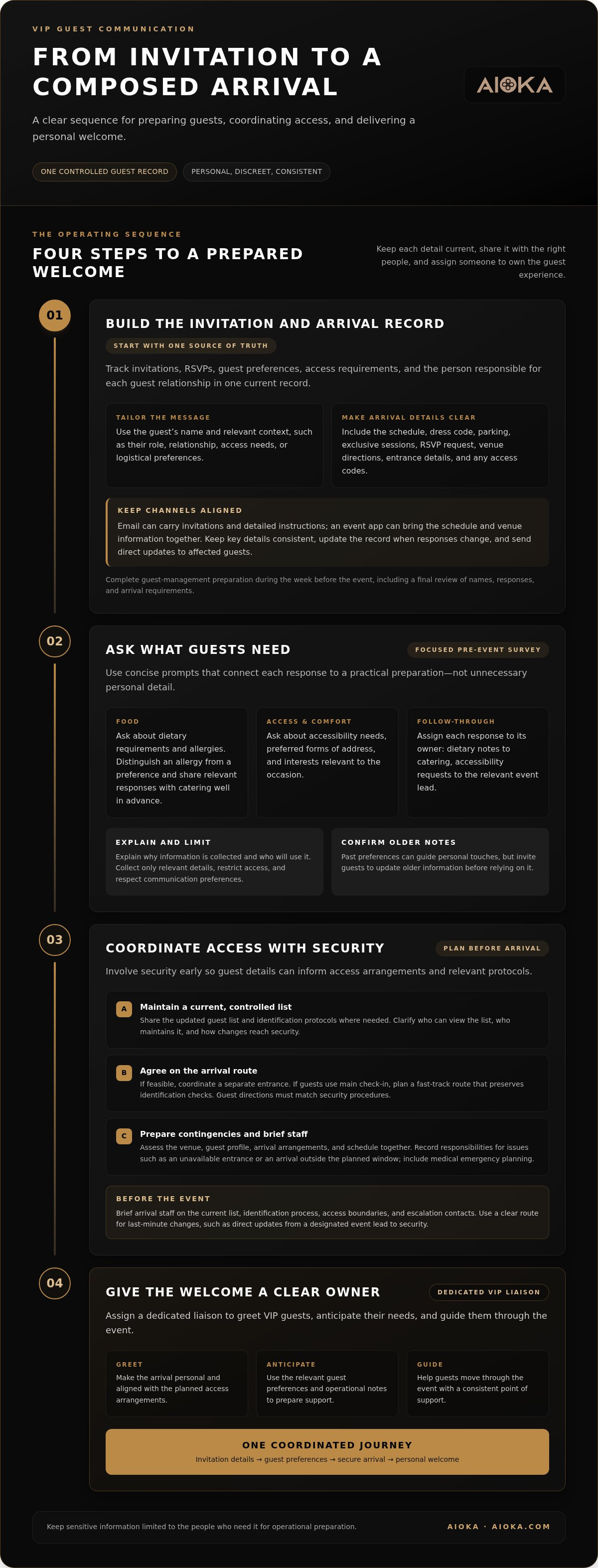
3. Advance coordination with security teams
Involve the security team early, while guest details can still shape access arrangements. Share an updated guest list and identification protocols where needed. Clarify who can view the list, how changes reach the team, and which staff member maintains the current version. One controlled record helps prevent outdated names from circulating.
Ask security and event leads to assess risks together, considering the venue, guest profile, arrival arrangements, and event schedule. Use that assessment to prepare a contingency plan with clear responsibilities. For example, decide how staff will respond if an entrance becomes unavailable or a guest arrives outside the planned window. Record the agreed process for relevant teams.
Design the VIP arrival channel to be discreet, efficient, and secure. If a separate entrance is feasible, communicate its location and access protocol to relevant staff. If guests use the main check-in area, plan a fast-track route that preserves identification checks. Make sure guest-facing directions match the procedures security will use.
Consider whether a security escort or secured VIP area is appropriate to the assessed risks. If an escort is planned, clarify the meeting point, route, and handoff with the event team. Include medical emergency planning in the broader contingency approach, so staff know how to escalate an incident without improvising in front of guests.
Before the event, brief arrival staff on the current guest list, identification process, access boundaries, and escalation contacts. Set a clear method for communicating last-minute changes, such as having a designated event lead update security directly. Keep messages factual and limited to operational needs; unnecessary personal details can distract from the decisions staff must make.
4. Assigning a dedicated VIP liaison
A dedicated liaison gives each VIP a clear point of contact from arrival through the event. Assign the role according to guest needs, schedule complexity, and the level of personal support required. A celebrity or other VIP with particular support needs may benefit from an individual host who can anticipate requests and coordinate discreetly with event staff.
Before the event, brief the liaison on the guest’s background, relationship with your organization, and relevant preferences. Include pronunciation, preferred form of address, planned introductions, and agreed access arrangements. For example, if a guest is expected to meet an executive, confirm who will make the introduction and where.
Give the liaison a practical run sheet with arrival details, key timings, meeting points, and the names of responsible team members. Clarify how to reach the event lead and security team if plans change. Limit sensitive information to what the liaison needs to welcome and assist the guest.
On arrival, the liaison should recognize the guest, greet them by name, and guide them through the agreed next step. This may mean escorting them to registration, introducing their host, or helping them find a scheduled session. Throughout the event, the liaison can monitor timings, communicate changes directly, and pass requests to the right staff member.
A defined handoff matters when the liaison cannot remain with the guest. Agree in advance who assumes responsibility during a meeting, meal, or transition between spaces. Afterward, note relevant feedback and unresolved requests for the event lead. Plan a more considered VIP guest experience by shaping hosting around attentive, coordinated support.
Staff greeting VIP guests should know their names, faces, and essential details in advance. A dedicated person or team can manage VIP needs, concerns, and feedback throughout the program.
AIOKA: Corporate Hospitality Packages
AIOKA’s Corporate Hospitality Packages offer a natural next step for brands hosting clients at Formula 1 race weekends. They bring together exclusive trackside locations, considered hospitality, and the setting for meaningful business relationships. For hosts developing a guest experience around a race weekend, this can connect the invitation and arrival planning with a distinctive occasion.
AIOKA’s immersive brand activations and curated culinary experiences can shape the event atmosphere and guest engagement. The right combination depends on the occasion, the audience, and the relationships your team wants to cultivate. Thoughtful communication prepares guests to enjoy the experience with confidence.
Visit aioka.com to explore AIOKA’s corporate hospitality offering.
Shape the next guest experience with intention
Let the next event begin with a clear view of the relationships you want to strengthen. A well-designed pre-event communication plan for VIP guests connects each invitation, arrival, and personal interaction to that purpose, rather than treating them as separate arrangements.
Before planning begins, define what a successful guest experience should make possible: a meaningful conversation, a stronger client relationship, or a distinctive brand impression. That intention can guide how the event is hosted and how each guest is welcomed, while leaving room for the personal details that make the occasion feel considered.
AIOKA’s corporate hospitality, brand activation, and culinary offerings can support an occasion shaped around those priorities. Contact AIOKA to plan VIP communications and consider how the guest experience can serve your event’s wider purpose.
With a deliberate approach, thoughtful hosting can strengthen relationships long after the event.
Frequently Asked Questions
What should a pre-event communication plan for VIP guests include?
Map each message to a guest milestone, from invitation to departure, and assign an owner to every communication. Add a simple message register showing the intended audience, purpose, channel, and latest approved version. For example, if the agenda changes, the register helps the team identify which guests need an updated schedule and who will send it.
What should VIP guests know about arrival, parking, and check-in?
Give guests the practical details they need to reach the correct arrival point and complete check-in smoothly. Clarify the expected drop-off location, parking route, entrance name, and identification or confirmation they should have ready. If a route changes, include the replacement directions in the same message, so guests are not left comparing conflicting instructions.
How should organizers communicate VIP access, seating, and event benefits?
Describe each arrangement precisely, including where access applies, whether seating is assigned, and which sessions or experiences are included. Avoid implying benefits a guest has not been offered. For instance, if a reception invitation includes a hosted conversation but not reserved seating, make that distinction clear. Consistent wording helps guests understand the experience and staff deliver it as intended.
What is the best RSVP and follow-up process for VIP guests?
Use one designated RSVP channel and record each response against the guest’s name, rather than relying on scattered email threads. Acknowledge every reply, note requested changes, and assign an owner to resolve open items. For guests who have not responded, send a discreet individual reminder that clearly explains how to reply. After the event, invite concise feedback on the experience.
How far in advance should event organizers contact VIP guests?
Contact VIP guests once the invitation details and event arrangements are ready, and complete guest-management preparation during the week before the event.


